
Visual inspection alone misses the majority of hidden bearing failure causes. Most maintenance teams rely on surface examinations to identify why bearings fail, but microscopic misalignment, subsurface crack propagation, and lubricant degradation routinely escape detection—until the next unplanned shutdown.
Accurate bearing failure diagnosis through a structured three-stage analytical process dramatically reduces unplanned downtime and prevents recurrence. By combining ISO-standardized inspection methods with root cause analysis, maintenance managers can identify the true failure trigger rather than treating symptoms. Pairing this diagnostic rigor with correct replacement bearing selection—matching clearance, material, and sealing to actual operating conditions—cuts recurrence rates substantially.
I remember flying out to a steel mill in Brazil that kept blowing through spherical roller bearings on their conveyor line every few months. They blamed the grease, blamed the housing, blamed everything under the sun. I pulled the failed units on the shop floor, and the raceways showed a textbook asymmetric spalling pattern—classic misalignment signature from a bent shaft. Once we walked their team through the actual failure modes instead of guessing, the recurring breakdowns stopped. That field-level reality is why bearing failure diagnosis matters far more than most procurement specs acknowledge.

Understanding the specific failure mode is the first step toward a targeted solution. The following sections walk through identification, diagnosis methodology, replacement selection, and supplier partnership—all grounded in field experience across steel mills, wind farms, and mining operations.
What Are the Primary Bearing Failure Modes in Industrial Applications?
Seven distinct failure modes account for the overwhelming majority of industrial bearing failures. Each mode presents recognizable visual and performance signatures that determine both immediate repair actions and long-term prevention strategies. Misidentifying the mode leads directly to selecting the wrong replacement bearing and guaranteeing repeat failure.
| Failure Mode | Typical Visual Signature | Common Root Trigger |
|---|---|---|
| Fatigue Failure | Crescent-shaped spalling on raceways or rolling elements | Subsurface crack propagation under cyclic loading |
| Lubrication Failure | Brown or black discoloration, metal-to-metal contact marks | Incorrect lubricant type, insufficient quantity, or additive degradation |
| Contamination | Embedded particles, scratch marks, abrasive wear patterns | Particulate ingress through inadequate sealing or handling |
| Misalignment | Uneven wear concentrated on one side of raceways, cage distortion | Shaft deflection or mounting errors exceeding angular tolerance |
| Corrosion | Rust deposits, pitting, flaking surfaces | Moisture ingress, chemical exposure, or insufficient sealing |
| Overloading | Brinelling marks, raceway deformation | Excessive radial or axial loads beyond rated capacity |
| Improper Installation | Handling marks, cracked rings, brinelling at mounting | Incorrect mounting force, impact damage, or cold expansion errors |
A steel mill we supported was experiencing repeated monthly failures of 22324 CA/W33 spherical roller bearings on their conveyor system. Initial visual checks suggested routine wear, but dimensional analysis uncovered a 0.02mm misalignment in the housing bore—something standard maintenance rounds never caught. After correcting the alignment and supplying a full batch of emergency replacement bearings with rapid dispatch, the mill reduced unplanned downtime by 8 hours monthly.

The critical takeaway: fatigue and lubrication failures together represent the largest share of premature bearing deaths. Yet many teams default to blaming "material quality" when the real culprit is often a degraded lubricant film or a contaminated operating environment. Bearing failure diagnosis must start with honest visual classification before jumping to conclusions.
How to Diagnose Bearing Failures Beyond Visual Inspection?
A disciplined three-stage analytical process—disassembly, cleaning, and inspection—prevents misdiagnosis in the majority of industrial cases. Relying solely on what the eye can see leads maintenance teams down the wrong path repeatedly. The real diagnostic value emerges only when physical evidence is correlated with condition monitoring data and lubricant analysis.
| Diagnostic Step | Common Mistake | Correct Approach |
|---|---|---|
| Disassembly | Rushing removal with improvised tools, causing secondary damage | Using dedicated pullers, photographing initial condition, and documenting orientation |
| Cleaning | High-pressure water or steam forcing contaminants deeper into surfaces | Ultrasonic cleaning with filtered solvents at controlled temperatures |
| Inspection | Focusing only on obvious macroscopic damage | Measuring dimensional tolerances with calibrated instruments to micron-level accuracy |
| Data Analysis | Ignoring historical vibration and temperature trends | Correlating vibration signatures in the 1-10kHz range with physical findings |
| Root Cause Identification | Stopping at "normal wear" as the conclusion | Tracing failure progression through material certification and lubricant chemistry |
A European wind energy asset manager brought us a recurring gearbox failure case involving 230/500 CAK spherical roller bearings. Their initial diagnosis pointed to manufacturing defects. Our ISO-certified inspection process told a different story: the lubricant had degraded due to incompatible additive packages reacting under operating temperatures. We supplied custom-ordered replacement bearings with revised lubrication specifications, and the installation ran trouble-free for an extended multi-year period.

The diagnostic workflow should proceed in this order:
- Dimensional Measurement – Verify bore, outside diameter, and width against manufacturer specifications using coordinate measuring machines. Even slight dimensional drift indicates mounting damage or thermal distortion.
- Material Analysis – Conduct hardness testing on the Rockwell C scale and perform metallurgical examination to confirm material certification compliance. Subsurface hardness anomalies reveal overheating during operation.
- Lubricant Testing – Analyze oil or grease samples for viscosity shift, particulate contamination, and additive depletion using Fourier-transform infrared spectroscopy. This step frequently exposes the true root cause when physical bearing damage looks ambiguous.
- Vibration Analysis – Compare pre-failure vibration spectra against ISO 10816 thresholds to identify abnormal frequency patterns that correlate with specific defect locations.
- Failure Progression Mapping – Document damage stages chronologically to determine whether failure originated during installation, steady-state operation, or a maintenance intervention.
Operators often rush disassembly to minimize downtime, but this habit causes secondary damage that contaminates the entire diagnosis. Proper pullers, photographic documentation, and orientation markings take minutes but save weeks of misdirected troubleshooting.
What Factors Should Guide Replacement Bearing Selection After Failure?
Replacement bearing selection must address both the identified failure cause and the actual application requirements. Simply ordering the same part number without correcting root causes leads to the majority of failures recurring within a short timeframe. Bearing failure diagnosis is only half the equation—correct selection completes the loop.
| Bearing Type | Key Characteristics | Optimal Application Context |
|---|---|---|
| Deep Groove Ball Bearings | High speed capability, low friction | Lubrication-related failures in electric motors and pumps |
| Spherical Roller Bearings | Self-aligning capability, high radial load capacity | Misalignment-driven failures in conveyor systems and gearboxes |
| Tapered Roller Bearings | Combined radial and axial load handling | Overloading failures in mining equipment and heavy axles |
| Cylindrical Roller Bearings | High radial load capacity, separable design | Contamination-related failures in textile and paper machinery |
| Angular Contact Ball Bearings | Precise axial positioning, paired mounting options | Fatigue failures in machine tool spindles |
A mining operation procurement manager faced persistent grinding mill downtime caused by premature failure of standard tapered roller bearings. Our technical team recommended upgrading to 32230 tapered roller bearings with C3 clearance and enhanced material certification. The full bulk order was dispatched rapidly, and the upgrade reduced failure frequency substantially in harsh mining conditions—primarily because the C3 clearance accommodated thermal expansion that the original specification could not handle.
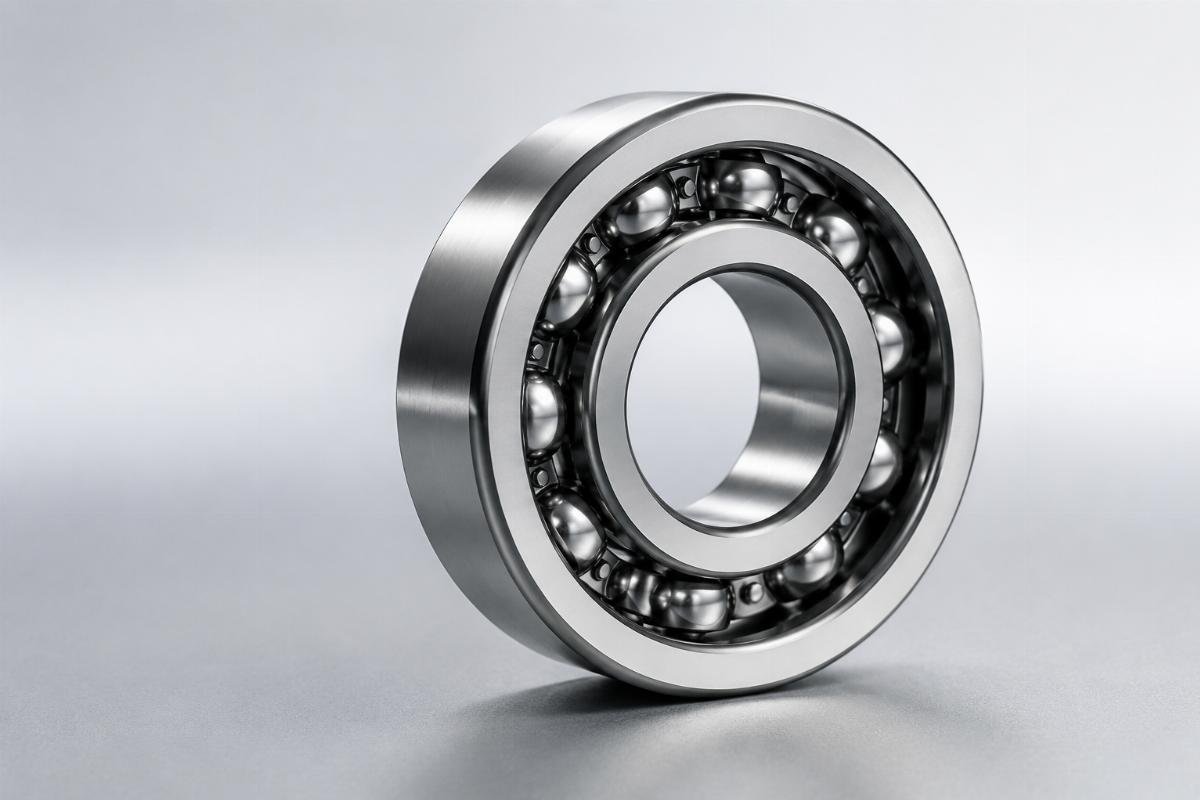
Five selection factors demand attention during bearing failure diagnosis follow-up:
- Clearance Specification – Match radial clearance options (C2, CN, C3, C4) to the actual operating temperature range and shaft fit requirements. A bearing that fits perfectly at room temperature may bind catastrophically at operating temperature without adequate clearance.
- Material Selection – Standard chrome steel serves most applications, but stainless steel addresses corrosion environments and ceramic hybrids handle extreme speed scenarios. Material choice must reflect the failure mode identified.
- Cage Design – Brass cages withstand high loads, polyamide cages resist chemical attack, and steel cages tolerate extreme temperatures. Cage material interacts directly with contamination and lubrication failure modes.
- Sealing Configuration – Contact seals (2RS) protect against contaminated environments, while non-contact shields (ZZ) suit high-speed applications where friction heat is a concern.
- Lubrication Compatibility – Ensure the bearing internal lubricant matches existing system specifications. Incompatible grease thickeners or additive packages are a silent killer that visual inspection rarely catches.
The availability of rare designations—large bore sizes, special precision classes, non-standard clearance—often determines whether a proper engineering solution can actually be implemented. Waiting weeks for a factory lead time on a C4-clearance spherical roller bearing is not acceptable when a production line is down.
How to Partner With Suppliers for Effective Bearing Failure Prevention?
Strategic supplier partnerships reduce bearing failure recurrence rates substantially compared to transactional purchasing. The right supplier functions as an extension of your maintenance engineering team, providing technical expertise, batch-level traceability, and emergency logistics support that generic distributors simply cannot match.
| Supplier Capability | What to Verify |
|---|---|
| Product Traceability | Full documentation from raw material to finished product, including verifiable batch codes and test certificates |
| Technical Support | Dedicated application engineers with industry-specific failure analysis experience |
| Inventory Depth | Broad stock coverage including rare designations with emergency dispatch capability |
| Quality Assurance | ISO 9001 and IATF 16949 certification with documented inspection at each stage |
| Post-Sale Service | On-site installation guidance, performance monitoring, and proactive replacement planning |
An agricultural equipment dealer network struggling with seasonal bearing shortages partnered with us to implement a custom stocking program. By analyzing years of failure data and aligning inventory with their planting and harvest cycles, we reduced their emergency orders dramatically and improved equipment uptime during critical seasonal windows. Phased delivery ensured just-in-time stock availability across their regional service centers.

When evaluating suppliers for bearing failure diagnosis support, batch traceability is non-negotiable. Every shipment should carry batch numbers verifiable against manufacturer records, certificates of origin, and inspection documentation. Counterfeit and mislabeled bearings remain a persistent problem in global supply chains, and no amount of diagnostic rigor can compensate for installing a fake component.
Technical support quality separates capable suppliers from mere stockists. A supplier who can provide L10 life calculations, cross-reference clearance specifications, and contribute to root cause analysis adds measurable value to your bearing failure diagnosis program. This is particularly critical for procurement engineers managing multi-site operations across different regulatory environments.
Conclusion
Bearing failure diagnosis is a structured discipline, not a visual guessing game. The majority of recurring failures stem from misidentified root causes—misalignment mistaken for wear, lubricant degradation blamed on material defects, contamination overlooked until catastrophic seizure. A three-stage analytical process combining proper disassembly, precision measurement, and data correlation identifies the true failure mode. Correct replacement bearing selection—matching clearance, material, sealing, and lubrication to actual operating conditions—then closes the loop and prevents recurrence. Partnering with traceable, technically capable suppliers ensures that the engineering solution you specify is exactly what arrives on your maintenance floor.