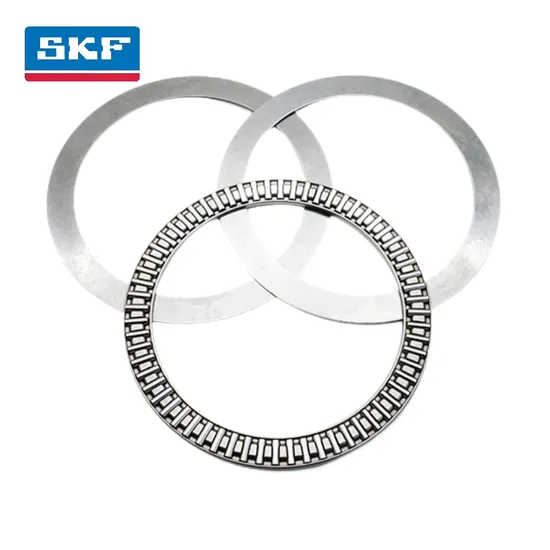
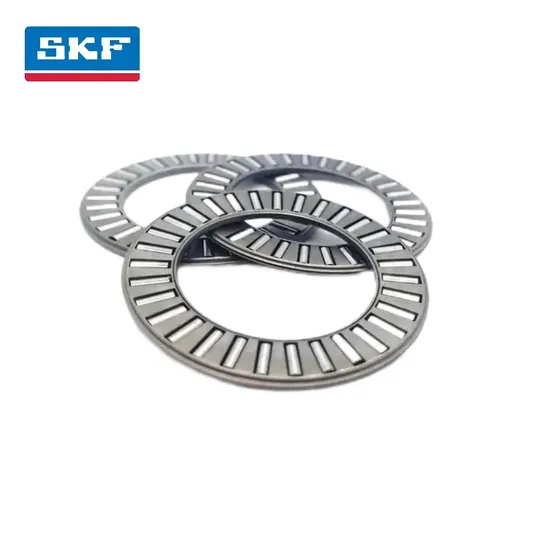
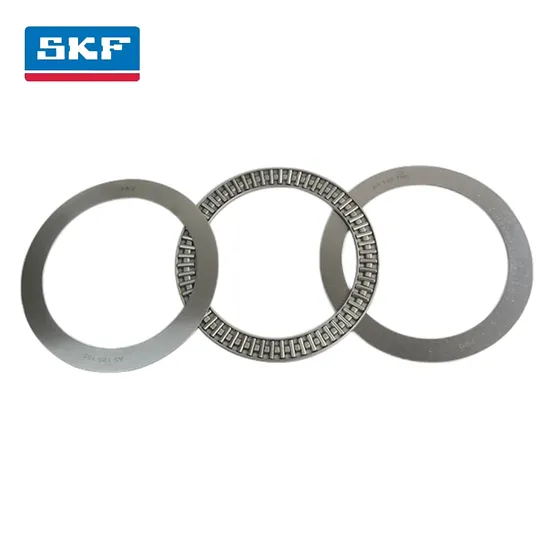
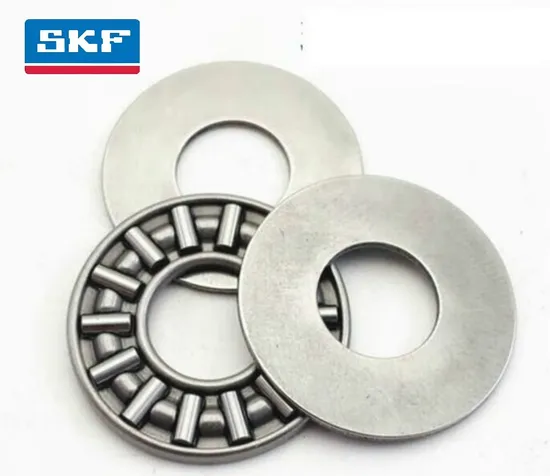
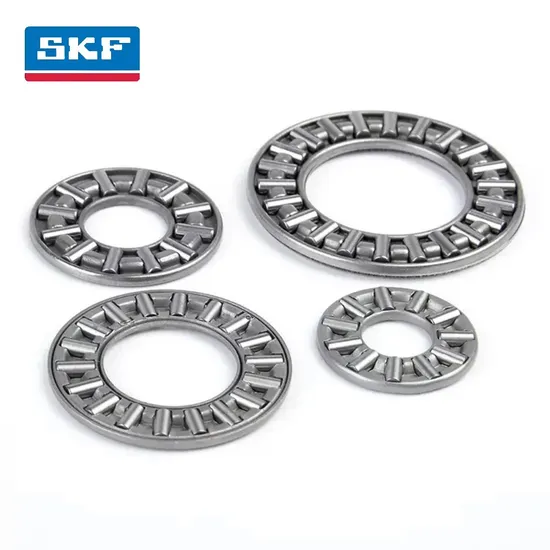
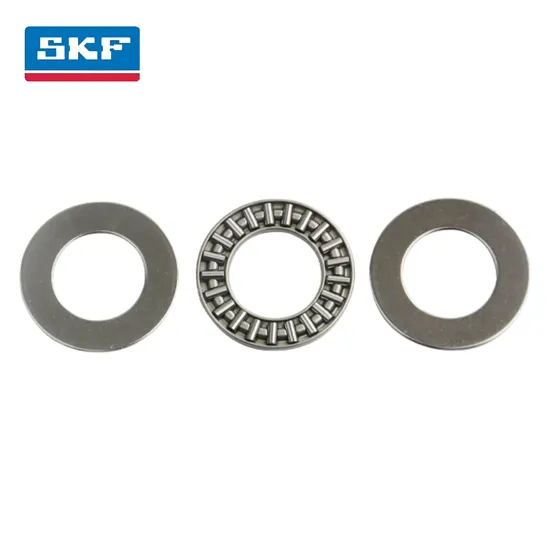
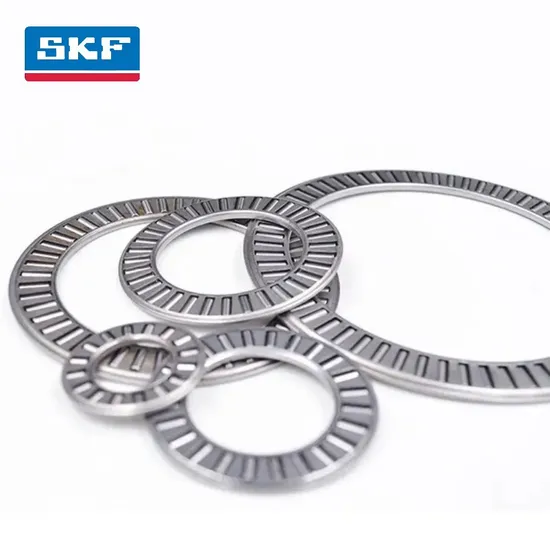
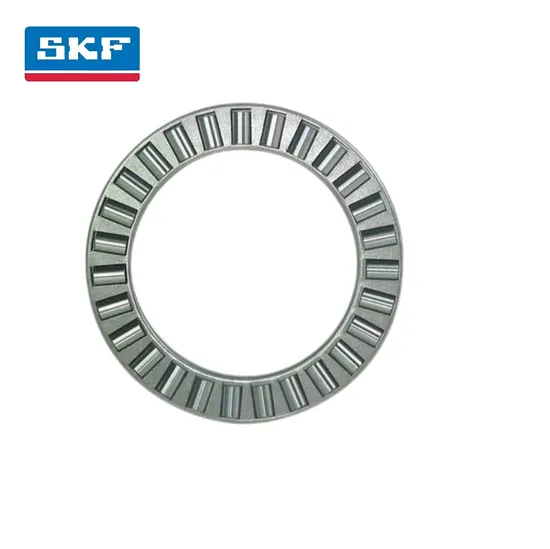
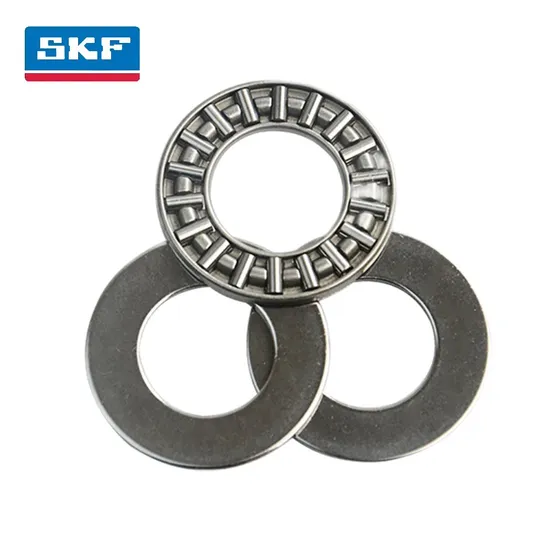
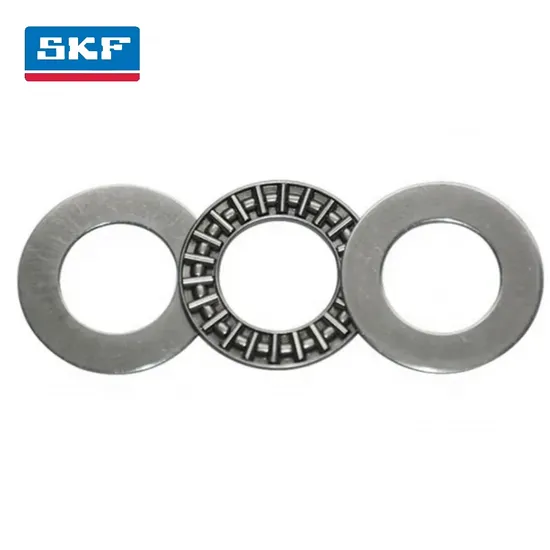
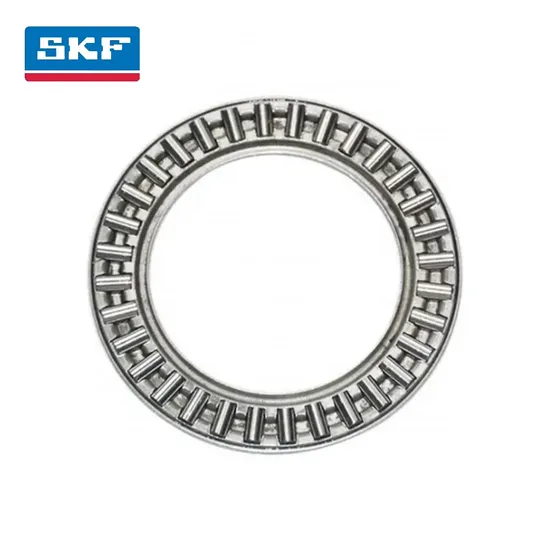
SKF thrust roller bearings are designed for applications with high axial load requirements, including gear units, extruders, cranes, marine drives, presses and heavy industrial machinery. Roller contact provides greater thrust capacity than a comparable ball-bearing arrangement, but the bearing type, cage design, lubrication and mounting surfaces must match the actual load path and operating environment.
Select a Thrust Roller Bearing for High Axial Loads
Start with the complete bearing designation and confirm the bore, outside diameter, height and thrust direction. Cylindrical, spherical and tapered roller thrust designs behave differently under speed, alignment and load conditions. Spherical roller thrust bearings can accommodate some misalignment and combined load effects, while other designs need more precise mounting and axial guidance. The shaft and housing washers, support faces and lubricant delivery should all be reviewed before an interchange is approved.
Heavy equipment applications often operate with variable load, contamination, heat and limited maintenance access. Share the speed, temperature, lubricant, load direction, duty cycle and equipment model in addition to the bearing reference. This helps distinguish a direct replacement from an alternative that merely appears to fit by dimensions.
Typical Applications
- Extruders, presses and screw-drive systems
- Industrial gear units and vertical-shaft assemblies
- Cranes, marine drives and heavy material-handling equipment
- Mining, steel and process-industry machinery
Related Bearing Types
For lower axial-load arrangements, compare thrust ball bearings. For a bearing that must support combined radial and axial forces, consider tapered roller bearings. High-radial-load applications with axial displacement requirements may be better served by cylindrical roller bearings.
Request a Quote
Submit the full bearing model, dimensions, equipment application, load direction, lubrication details and quantity via our inquiry page. This provides the basis for reviewing the relevant thrust roller bearing configuration for your sourcing requirement.
Lubrication, Alignment and Mounting
Thrust roller bearings work under concentrated contact stresses, so clean lubrication and correctly supported mounting faces are essential. Review oil or grease type, supply method, relubrication interval and operating temperature with the bearing series. In contaminated environments, the sealing design of the surrounding housing has a direct effect on service life. Avoid introducing dirt during installation and check that shaft and housing seats are flat, rigid and dimensionally suitable.
Some thrust roller designs can tolerate limited misalignment; others require precise alignment. Do not rely on general appearance when selecting a substitute. The full suffix, cage design, internal geometry and washer arrangement should be retained in the procurement record. When a bearing has failed, share the operating symptoms and damage observations with the model number so that the replacement request can distinguish lubrication, mounting or load issues from a simple part-number need.
Supply Planning for Heavy-Duty Equipment
For project or maintenance purchasing, group requests by full designation, quantity, application position and destination. Include any inspection, packaging or documentation requirements in the inquiry. A clear technical request helps reduce mistakes when different thrust roller series have similar outside dimensions but different load and alignment capabilities.
Featured Designs and Selection Checks
Thrust roller bearing designs vary by roller geometry and their ability to manage alignment, speed and combined loading effects. Confirm the shaft and housing washer dimensions, the direction of thrust, the bearing height and the lubrication arrangement. A replacement should preserve the function of the original bearing arrangement, especially in gear units and process equipment where axial location is critical.
For a repeat order, retain the complete marking, equipment position, operating temperature and quantity in the procurement record. This allows maintenance teams and distributors to distinguish similar-looking references and maintain consistent bearing selection across each equipment line.
Order Preparation
When requesting a thrust roller bearing, identify the full series, thrust direction and equipment position in addition to dimensions. This allows the quotation review to compare the correct load, alignment and lubrication characteristics for the bearing arrangement.

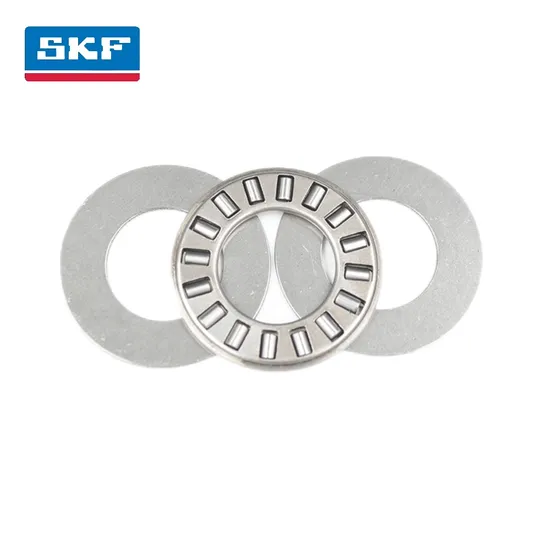 SKF Genuine