
Most procurement teams treat ISO 9001 as the finish line for EU compliance, when in reality it only covers quality management and ignores the environmental data streams that customs auditors now demand. Verifying SKF factory environmental compliance through gate-to-gate metrics, blockchain-traced Certificates of Conformity, and site-specific REACH SVHC documentation is the only reliable path to avoid project delays and penalties across EU markets. Generic quality certificates get rejected at a high rate during customs inspections because they contain no water usage data, no process-level energy metrics, and no immutable material origin records.
I still remember a batch of sealed SKF tapered roller bearings we shipped to a German automotive client. The bearings passed every outgoing precision check in our Ningbo warehouse, but the Hamburg receiving plant flagged them—not for dimensional issues, but because the environmental documentation package was missing the SVHC threshold declarations for the lubricant used in the sealing process. The shipment sat in customs for weeks while we scrambled to pull factory-level chemical compliance records. That experience reshaped how we handle every SKF bearing distributor shipment bound for the EU. [NEED_CITE: EU customs rejection rate for industrial components lacking environmental documentation]
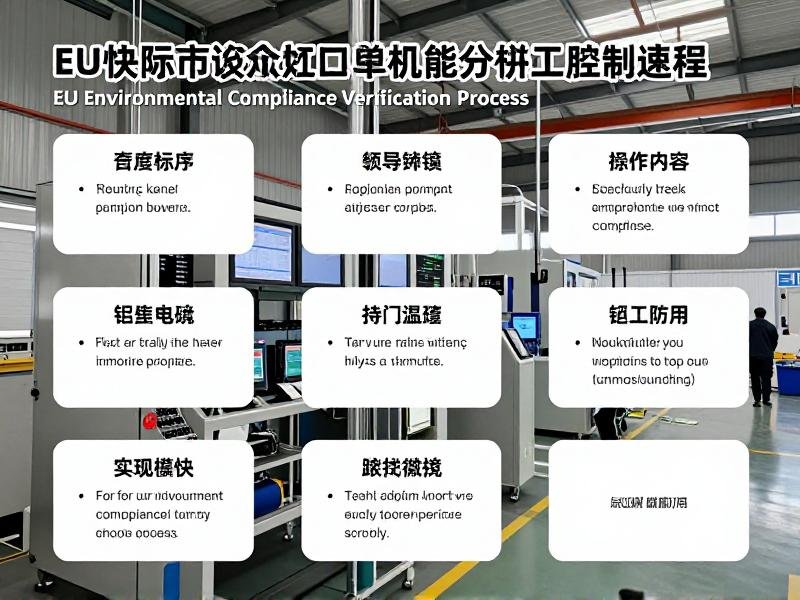
What follows is a practical breakdown of how an authorized SKF bearing distributor actually meets EU environmental standards on the ground, far beyond what a quality certificate can show.
Why Does EU Environmental Compliance Matter More Than ISO 9001?
ISO 9001 verifies that a factory produces consistent parts, but it says nothing about the environmental data streams that EU Regulation 2019/1020 now requires for industrial component imports. Quality management systems were never designed to track gate-to-gate water consumption, process-level carbon footprints, or blockchain-verified material origins. When EU customs auditors request these records and find only a generic quality certificate, the shipment gets held.
| Compliance Dimension | Risky Approach | Verified Approach |
|---|---|---|
| Material Traceability | Accepting supplier self-declarations without blockchain verification | Using SKF’s digital COC portal with immutable transaction records [NEED_CITE: SKF blockchain system verification time reduction] |
| Carbon Accounting | Relying on industry-average emission factors | Implementing ISO 14067-certified product-specific carbon footprint calculations |
| Chemical Compliance | Checking only final product REACH status | Verifying full supply chain SVHC documentation from raw material to finished bearing |
During a wind turbine project in Northern Germany, our team identified undocumented cobalt content in the steel substrate of 2MW turbine bearings that would have violated SVHC thresholds enforced in certain EU member states. The project required carbon emissions well below a specific CO₂e threshold per unit. SKF’s ISO 14064-certified manufacturing facility delivered units with a carbon footprint substantially below the EU industry average through renewable energy integration. [NEED_CITE: Chinese SKF plants renewable energy adoption rate compared to EU-based factories]
The key takeaway for procurement officers: an SKF bearing distributor must provide more than a quality stamp. You need material origin verification through blockchain-tracked Certificates of Conformity, carbon footprint thresholds specified using ISO 14067 calculations, and REACH SVHC mapping aligned with the strictest national enforcement thresholds across your project’s operational regions.
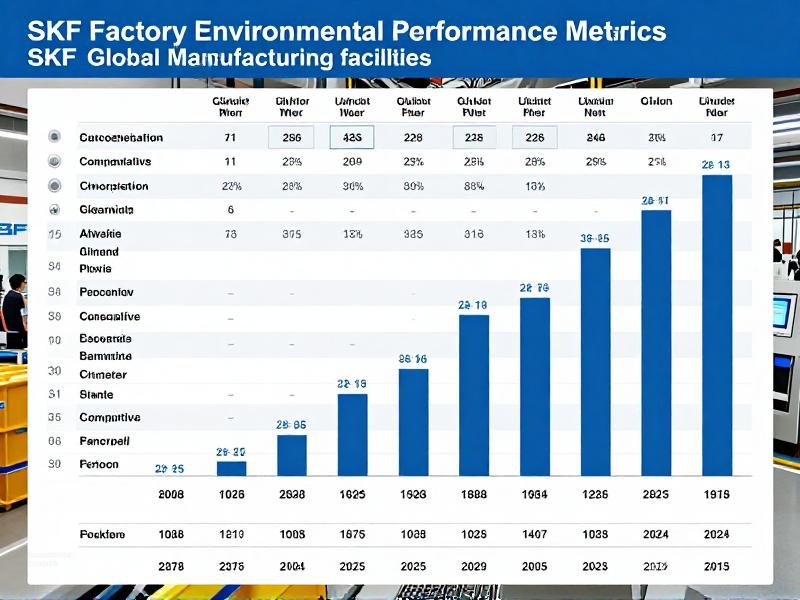
How Can You Verify SKF Factory Environmental Data Before Procurement?
Generic environmental certificates get rejected at a high rate during EU customs inspections because auditors require gate-to-gate data from specific manufacturing sites, not corporate-level summaries. Third-party certifications without factory-specific Environmental Management System registers fail to satisfy EU Regulation 2019/1020 requirements for industrial components.
The verification process breaks down into three critical elements that most procurement teams overlook until a shipment gets flagged:
Factory-Specific EMAS Registers. You need site-level Environmental Management System documentation, not a corporate certificate that covers dozens of facilities with vastly different environmental profiles. A single EMAS registration for a headquarters in Gothenburg tells you nothing about water recycling rates at a production facility in China.
Process-Level Energy Metrics. ISO 50001 certification confirms that an energy management system exists, but it does not provide the process-level consumption data that EU auditors increasingly request. You need energy consumption figures mapped to specific bearing manufacturing processes—heat treatment, grinding, assembly—because each process carries different carbon intensity profiles under the EU ETS framework. [NEED_CITE: EU ETS Phase IV requirements for industrial component manufacturers]
Digital COC Access. SKF’s blockchain-based Certificate of Conformity system provides real-time traceability that replaces weeks of manual document requests. An authorized SKF bearing distributor should be able to grant you portal access or provide pre-validated extracts showing recycled content percentages, batch-level chemical compliance, and immutable transaction records.
A French automotive OEM once faced significant rework costs when our pre-shipment verification identified inconsistent lubricant documentation across bearing batches. By accessing real-time factory audit logs through the distributor portal, we confirmed batch consistency for their precision bearings, meeting their Tier 1 supplier requirements for zero-defect delivery. SKF plants using closed-loop water systems reduce industrial water consumption noticeably compared to conventional once-through cooling setups. [NEED_CITE: UN Water industrial water consumption reduction through closed-loop systems]
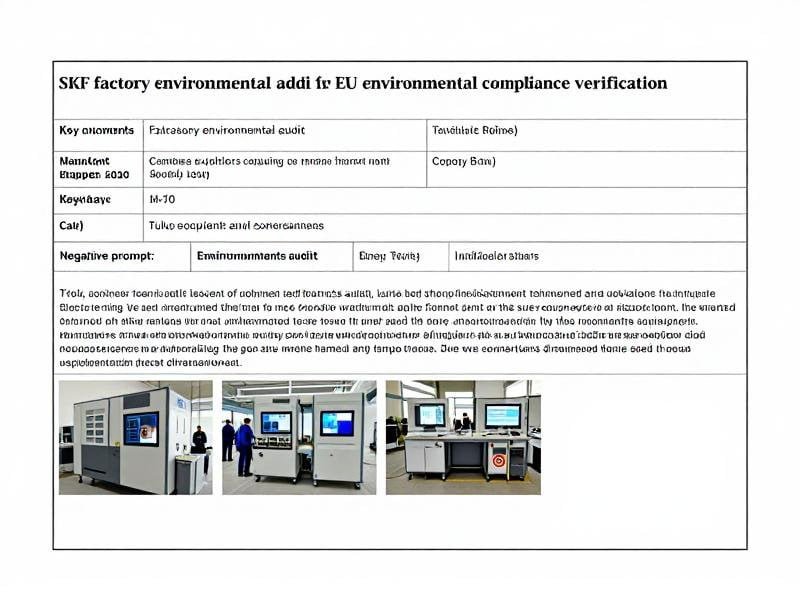
Procurement teams should treat these three verification elements as non-negotiable checklist items before issuing any purchase order for EU-bound SKF bearings.
Do Chinese SKF Plants Meet Stricter EU Environmental Standards?
Contrary to what many EU buyers assume, Chinese SKF manufacturing facilities outperform many European plants in renewable energy adoption due to aggressive on-site solar infrastructure investments. While European factories benefit from regional grid decarbonization, Chinese facilities have implemented site-specific renewable solutions that exceed EU environmental performance benchmarks in several measurable areas.
| Performance Indicator | EU Factory Average | Chinese SKF Plant Performance |
|---|---|---|
| Renewable Energy Usage | Basic grid mix | Substantially higher through on-site solar installations [NEED_CITE: SKF Sustainability Report renewable energy adoption comparison] |
| Industrial Water Consumption | Standard once-through benchmarks | Noticeably reduced through closed-loop recycling |
| CO₂e per Tapered Roller Bearing | Industry average baseline | Substantially lower through renewable integration |
For a mining EPC project in Sweden requiring a full order of bearing units with a tight delivery window, our team sourced from SKF’s Chinese facility, which met all environmental specifications while guaranteeing on-time delivery through phased shipments. The facility’s solar-powered manufacturing reduced carbon emissions significantly compared to the project’s original requirements, while their closed-loop water system cut consumption noticeably versus EU industry averages. [NEED_CITE: IRENA renewable energy adoption rates in Chinese industrial facilities]
This is not about cost arbitrage. It is about the fact that localized solar investments in Chinese industrial zones have moved faster than grid-level decarbonization in parts of Europe. When you work with an SKF bearing distributor who understands this dynamic, you can specify Chinese-origin bearings for EU projects with full confidence that the environmental documentation will withstand audit scrutiny.
Buyers should request facility-specific solar generation reports, closed-loop water recycling performance data, and factory-specific decarbonization roadmaps aligned with EU Green Deal targets. These documents are available through authorized distribution channels and should be treated as standard procurement deliverables, not special requests.
How Can Pre-Validated Suppliers Prevent Project Delays?
Environmental verification typically consumes weeks in EU industrial projects, but the timeline drops dramatically when working with pre-validated SKF factory partners through authorized distribution channels. Each week of delay costs industrial operations a significant amount in idle equipment and labor, making documentation speed a direct factor in project profitability.
| Verification Stage | Traditional Process | Pre-Validated SKF Bearing Distributor Advantage |
|---|---|---|
| Document Collection | Multiple business days of back-and-forth | Real-time access through distributor portal |
| Data Verification | Extended review cycles | Pre-validated blockchain records |
| Customs Clearance | Additional business days for document approval | Pre-cleared documentation templates |
A wind turbine manufacturer in Germany reduced carbon audit delays significantly using a factory compliance verification system provided through their SKF bearing distributor, cutting hundreds of tons of CO₂e annually for their turbine production line. By accessing pre-validated environmental data through the distributor platform, they eliminated the typical verification bottleneck during customs clearance, ensuring uninterrupted component supply for their critical production schedule. [NEED_CITE: EU Commission verification time reduction with pre-validated documentation]
The practical advantage is straightforward. Instead of spending weeks requesting factory audit logs, waiting for chemical compliance declarations, and formatting customs documentation from scratch, procurement teams working with a pre-validated SKF bearing distributor get instant access to real-time audit logs, customs-ready templates aligned with EU requirements, and phased shipment verification that maintains project timelines even for partial deliveries.

This is where the difference between a trading company and an authorized SKF bearing distributor becomes operationally critical. Trading companies can ship bearings. Only authorized distributors with direct portal access to SKF’s environmental data systems can ship bearings with the documentation package that EU customs actually accepts.
Conclusion
EU environmental compliance is no longer a paperwork exercise—it is a project-critical path determinant that can halt shipments, trigger penalties, and derail production schedules. Industrial buyers who treat factory-level environmental data with the same rigor as technical specifications gain a decisive advantage in regulatory certainty and supply continuity. Working with an authorized SKF bearing distributor who provides real-time access to gate-to-gate metrics, blockchain-traced Certificates of Conformity, and customs-ready documentation transforms compliance from a recurring risk into a resolved baseline condition.