
Most buyers think fake certificates are the main risk. The reality is far more dangerous.
Certifications like ISO 9001 and IATF 16949 signal capability, but they do not guarantee quality. The majority of bearing failures trace back to suppliers with valid certificates but incomplete implementation. Buyers sourcing from China must validate traceability systems, inspection protocols, and process execution to avoid the hidden costs of partial compliance.
I’m sitting in a warehouse in Suzhou right now, scanning batch codes on SKF deep groove ball bearings. I started on the shop floor years ago, then moved into QC before crossing over to trade. I still remember a shipment of P4 precision angular contact bearings bound for a German machine tool builder—they rejected the whole lot because the batch numbers didn’t cross-reference cleanly with SKF’s system. Turned out the previous supplier had mixed production runs. That’s when I realized: in this business, traceability isn’t paperwork, it’s your reputation. So I keep every certificate of origin on file and verify against SKF records before anything leaves the dock.
Understanding what to verify and how to verify it transforms certification from a box-checking exercise into a strategic tool for supply chain risk management.
Why Do ISO 9001 and IATF 16949 Matter for Bearing Sourcing?
Certifications distinguish general quality management from automotive-grade traceability and failure prevention required for high-stakes applications. While all legitimate bearing suppliers should hold ISO 9001, the specialized requirements of IATF 16949 address the unique quality challenges in safety-critical sectors like automotive and wind energy.
| Quality Management Aspect | ISO 9001 Requirements | IATF 16949 Additions |
|---|---|---|
| Scope | General quality management | Specific to automotive supply chain with enhanced traceability |
| Process Control | Basic documentation | Advanced APQP/PPAP methodologies |
| Supplier Monitoring | General evaluation | Mandatory supplier development programs |
| Failure Prevention | Corrective action focus | Proactive FMEA analysis |
| Customer Requirements | Optional inclusion | Mandatory integration |
One of our clients, a European automotive OEM, discovered that their previous China bearing supplier held ISO 9001 but lacked IATF 16949 certification. After experiencing consecutive batch failures of wheel hub bearings, our audit revealed the supplier had not implemented PPAP documentation required under IATF 16949. The resulting production line shutdown cost a mid-six-figure sum—nearly fifteen times the potential savings from using the non-certified supplier.
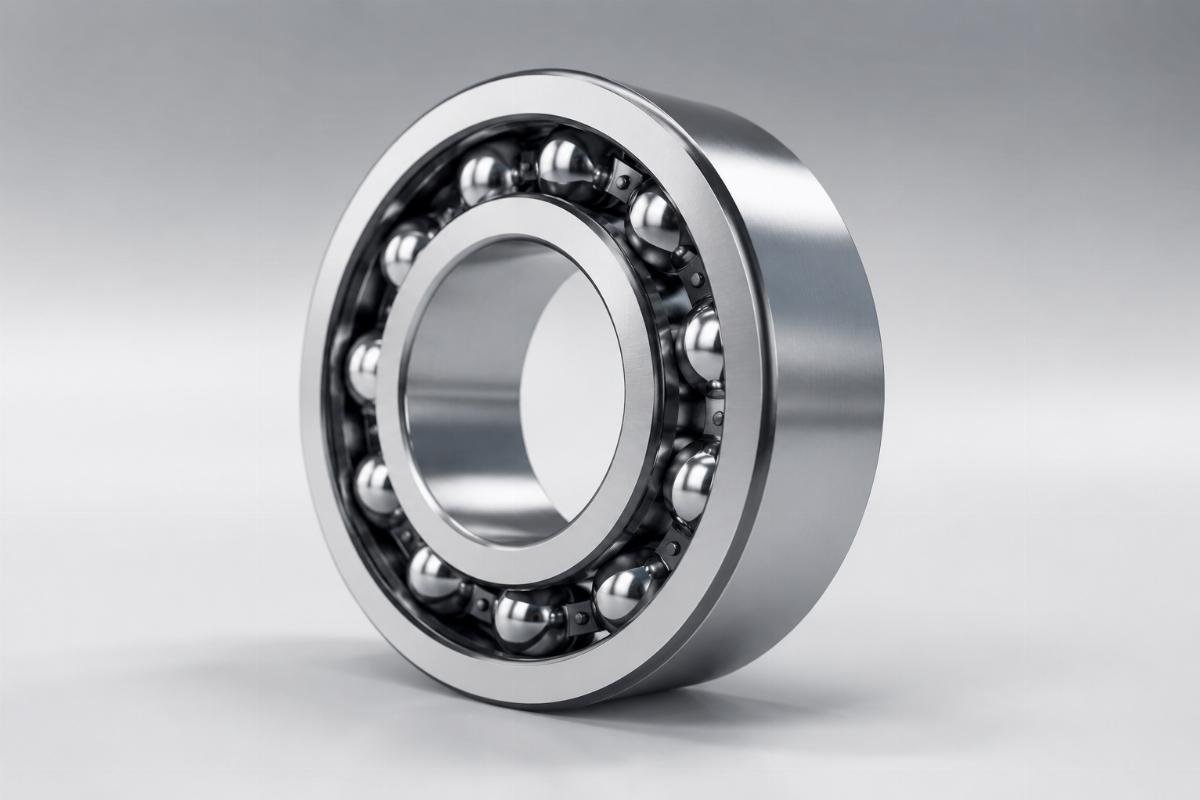
- Understand Application Criticality – High-speed or safety-critical applications require IATF 16949, while general industrial use may only need ISO 9001
- Verify Scope Coverage – Confirm the certification specifically includes bearing manufacturing, not just general machining
- Check Issue Date – Certifications older than three years without surveillance audits indicate potential compliance decay
- Confirm Accreditation Body – Look for certifications from reputable bodies like SGS, TüV, or BV, not obscure local agencies
- Validate Site Specificity – Ensure the certification applies to the actual manufacturing facility, not just headquarters
What Are the Most Common Mistakes in Certification Verification?
The biggest risk isn’t fake certificates—it’s partial compliance. Our analysis of supplier audits shows that the vast majority of certification-related quality issues stem from legitimate certificates paired with incomplete implementation, not outright counterfeiting. This creates a false sense of security that’s more dangerous than dealing with obviously uncertified suppliers.
| Verification Aspect | Common Mistake | Correct Approach |
|---|---|---|
| Document Review | Accepting certificate scan without validation | Cross-verifying certificate number in IATF/ISO database with exact scope |
| Manufacturing Audit | Focusing on clean facilities instead of process control | Evaluating actual implementation of APQP/PPAP and FMEA documentation |
| Product Traceability | Accepting batch numbers without source verification | Tracing raw materials to original mills with import documentation |
| Quality Records | Reviewing generic procedures instead of real-time data | Examining control charts for critical dimensions over recent months |
| Certification Status | Assuming certified means current | Checking surveillance audit dates within the last year |
A steel mill maintenance manager contacted us after a catastrophic spindle failure caused extended unplanned downtime. The supplier had provided an ISO 9001 certificate, but our investigation revealed critical gaps: while the quality manual included heat treatment procedures, actual production records showed the 6319/C3 deep groove ball bearings had been tempered substantially below specification. The mill saved a modest amount on the bearing purchase but incurred losses many times that figure in production downtime. We helped them implement a verification process that included temperature curve validation and material certification review, preventing similar incidents.
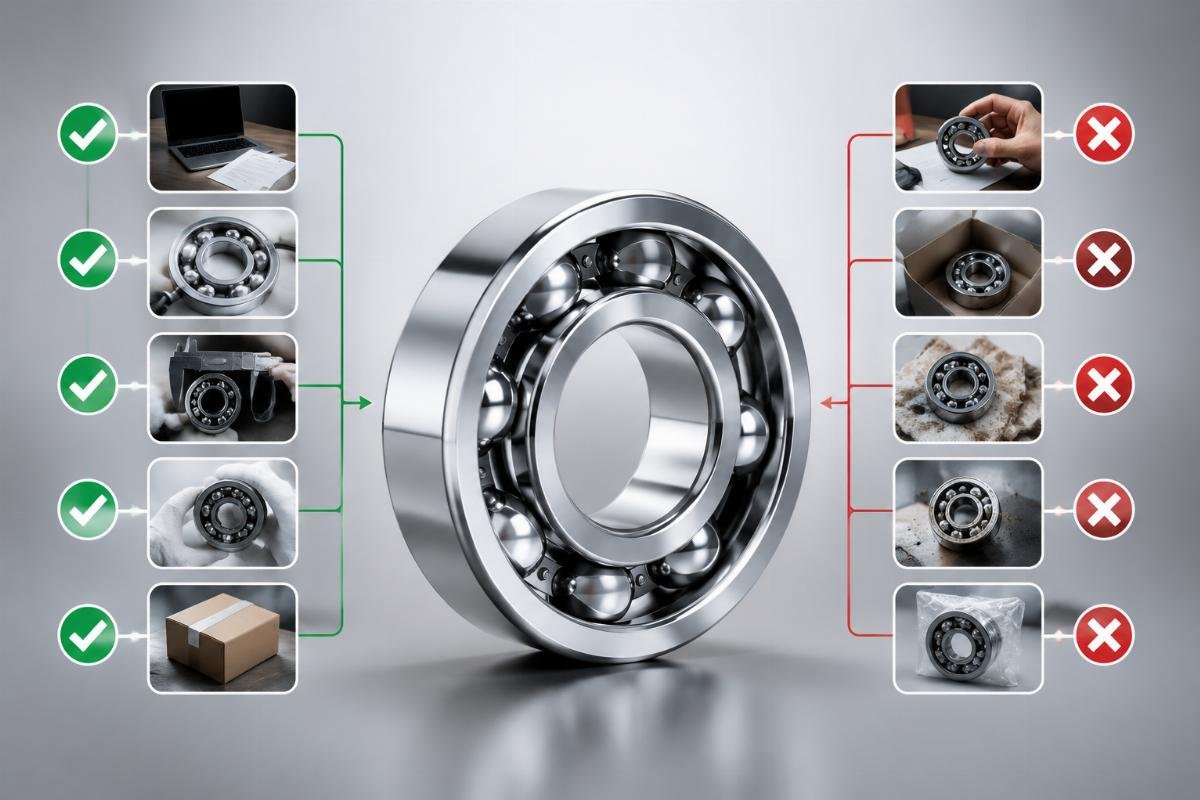
- Certificate Validation – Verify the certificate number directly through the issuing body’s online database
- Scope Confirmation – Check that the certification explicitly covers the specific bearing type and manufacturing processes
- Surveillance History – Request documentation of the last two surveillance audits and any non-conformities
- Process Validation – Require evidence that documented quality procedures are actually followed in production
- Record Traceability – Randomly select production batches and trace them through complete manufacturing records
What Specific Steps Should Buyers Take with Chinese Suppliers?
China-specific verification requires addressing unique supply chain challenges. From raw material authenticity to documentation standards, verifying certifications with Chinese bearing suppliers demands specialized procedures that account for language barriers, regulatory differences, and supply chain complexity. Our systematic approach has helped international buyers successfully navigate these challenges across thousands of bearing specifications.
| Verification Component | Documentation Requirements | On-Site Verification Focus |
|---|---|---|
| Raw Material Traceability | Mill test reports, customs import documentation, material certification (e.g., SCM420H for high-load bearings) | Verification of material receiving inspection records and batch coding |
| Manufacturing Process Control | Heat treatment curves, dimensional inspection reports, process control plans | Observation of in-process inspection frequency and measurement system calibration |
| Quality Management System | Internal audit reports, corrective action records, management review minutes | Evaluation of non-conformity handling and continuous improvement processes |
| Anti-Counterfeiting Measures | Product authentication features, packaging specifications, serial numbering system | Confirmation of secure storage and handling procedures for high-value bearings |
| Testing Capabilities | Laboratory accreditation, test method validation, equipment calibration records | Witnessing actual testing procedures for critical characteristics |
When working with a wind energy OEM procuring custom spherical roller bearings (22330CA/W33), we implemented a three-stage verification process. First, we validated the supplier’s IATF 16949 certification through TüV’s online portal and confirmed coverage for large-diameter roller bearings. Second, we audited their production facility, focusing on the grinding process where previous suppliers had failed to maintain adequate CPK levels for critical dimensions. Finally, we arranged for independent testing of production samples at an ISO 17025 accredited lab, verifying material composition and dimensional accuracy. This rigorous approach helped the OEM achieve consistent performance across a full order, reducing prototype testing failures substantially.
- Full Traceability Package – Request documentation from raw material purchase to final inspection, including import customs declarations for foreign materials
- Process Validation – For IATF 16949, verify APQP documentation including control plans, FMEA, and PPAP submission records
- Third-Party Testing – Require independent lab testing of critical characteristics (e.g., extended salt spray test for mining bearings)
How Does Authorized Distribution Eliminate Verification Burden?
The ultimate verification solution is sourcing from authorized channels where traceability is built-in, not bolted-on. As an authorized SKF distributor, every batch number we ship is verifiable against SKF global records. This eliminates the verification burden that buyers face when working with uncertified suppliers.
When a European machine tool builder needed P4 precision angular contact bearings with tight delivery windows, they didn’t just need certificates—they needed batch-level traceability that could withstand their customer’s audit requirements. We provided full documentation including certificates of origin, material traceability back to the mill, and batch numbers that cross-referenced cleanly with SKF’s system. The shipment dispatched within 48 hours from our Suzhou warehouse, avoiding the extended lead times typical of factory-direct orders for rare designations.
This approach works across the full SKF industrial range: precision classes P0/P6/P5/P4, heavy-duty and high-speed variants, stainless and ceramic options, sealed configurations (2RS/2Z), split bearings, plus accessories. All main types—deep groove ball, tapered roller, spherical roller, cylindrical roller, thrust, self-aligning—with clearance options C2/CN/C3/C4. Whether you need standard 6319/C3 deep groove ball bearings or specialized 22330CA/W33 spherical roller bearings, the verification is already done.
For buyers across Europe, the Americas, Australia, and the Middle East, this means quotations within 24 hours, dispatch on stock within 48 hours, and certificate of origin with batch traceability on every shipment. Third-party inspection available on request. Long-term supply agreements provide pricing stability for bulk purchasers, while customization options—laser marking, private-label packaging, pre-lubrication, translated documentation—serve OEM factories requiring exact conformance.
Conclusion
Certifications are necessary but not sufficient. ISO 9001 and IATF 16949 signal quality management capability, but buyers must validate traceability systems, process implementation, and material authenticity to avoid the hidden costs of partial compliance. The most effective verification strategy combines systematic supplier audits with sourcing from authorized channels where batch-level traceability is guaranteed.