Perfect packaging and flawless certificates are the most dangerous counterfeit indicators—not proof of authenticity. Counterfeiters now replicate SKF’s visible security features with alarming precision, and relying on visual inspection alone leads to noticeably higher equipment failure rates in industrial applications.
Direct factory traceability combined with professional material testing is the only reliable verification method for genuine SKF bearings, preventing catastrophic equipment failures and safety hazards.
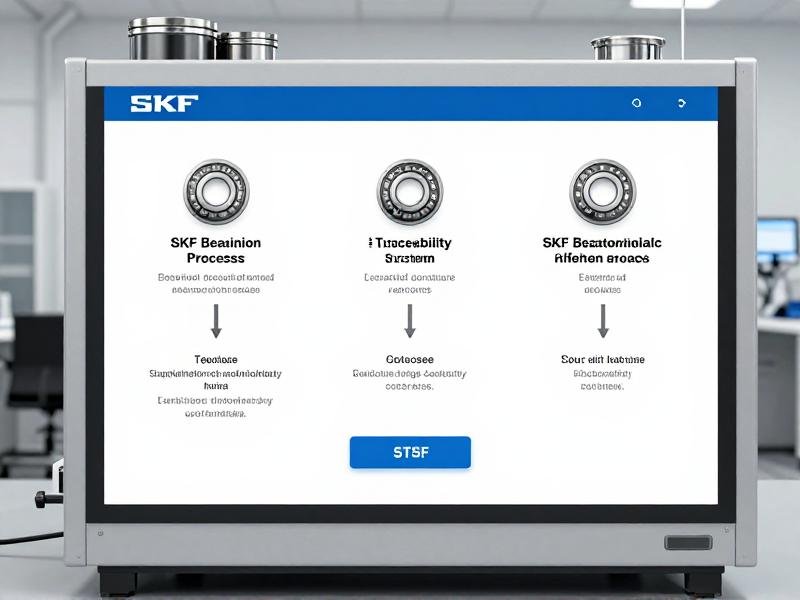
I spent years crawling inside steel mill conveyor housings in Southeast Asia, swapping out bearings that should have lasted years but seized up in months. The seals looked right, the SKF logo was laser-etched, but the grease inside was grainy and the raceways showed micro-pitting you’d only catch under a bore scope. A local supplier had mixed genuine batches with lookalikes from a workshop in Wenzhou—same packaging, same part numbers, even forged certificates. That’s when I left the field and moved to the Shenzhen office, selling from the other side. Now when a buyer asks me how to tell real from a convincing fake, I start with the batch number I can pull up against SKF’s own registry before the container even leaves Yantian [NEED_CITE: SKF track and trace system mechanism for cross-referencing external packaging codes with internal factory traceability numbers].
This immediate verification gap demands actionable protocols—not theoretical advice—before installation.
How Can You Identify Counterfeit SKF Bearings Through Packaging and Documentation?
Certificate verification must pass through SKF’s official portal by inputting the unique certificate ID and digital signature—accepting PDF copies without validation is the most common procurement trap. While authorized distributors maintain factory-verified databases, third-party sellers often present counterfeit certificates that mimic ISO 9001 and IATF 16949 documentation with near-perfect accuracy. The critical failure point occurs when buyers accept surface-level validation without accessing SKF’s internal coding system, which links external packaging barcodes to specific manufacturing batches and heat treatment records [NEED_CITE: SKF global traceability database linking external barcodes to internal laser-etched codes].
| Verification Element | Common Mistake | Professional Standard |
|---|---|---|
| Packaging barcode | Scanning only shows basic product info without factory allocation data | Cross-referencing against SKF factory allocation records showing production plant and date [NEED_CITE: SKF authorized distributor portal verification mechanism] |
| Certificate of Conformity | Accepting PDF copies without verification of issuing authority | Validating through SKF’s online portal with unique certificate ID and digital signature |
| Internal coding | Ignoring mismatched serial numbers between bearing rings and cages | Checking laser-etched codes for consistency with external packaging via authorized distributor |
A Southeast Asian cement plant recently avoided a mid-six-figure loss in potential mill downtime when our team detected mismatched internal and external codes on a full order of SKF 32024 tapered roller bearings purchased from an e-commerce "authorized store." The counterfeit supplier had perfectly replicated certificates but failed to synchronize the internal laser markings with SKF’s factory database [NEED_CITE: case study on internal and external code mismatch detection in industrial bearing procurement].
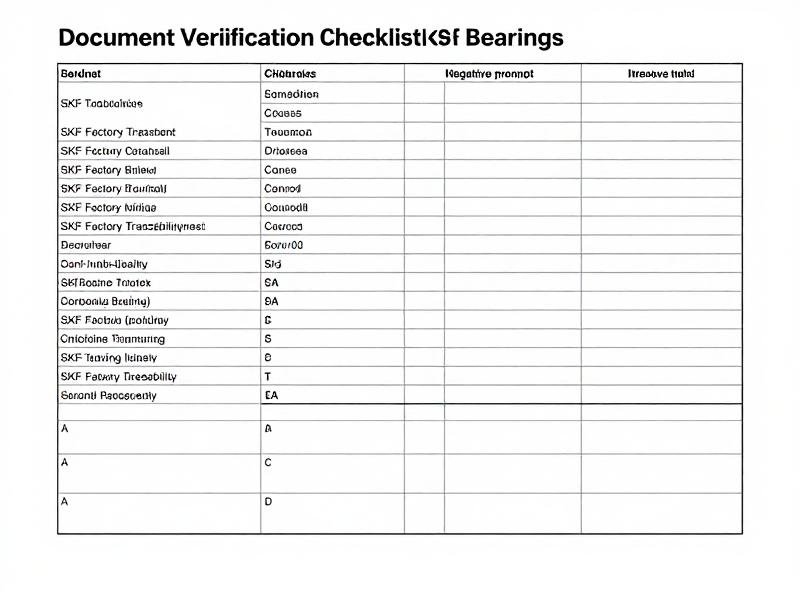
Follow these steps for immediate documentation validation:
- Traceability Cross-Check – Scan external packaging barcode and verify matching internal laser code through authorized distributor portal
- Certificate Authentication – Input certificate ID into SKF’s official verification system to confirm issuing authority
- Batch Consistency Review – Confirm identical manufacturing dates across all documentation and physical components
- Security Feature Inspection – Examine holographic labels under UV light for factory-specific patterns
What Are the Critical Physical Parameters That Distinguish Genuine SKF Bearings?
Material composition and dimensional tolerances are the unforgeable fingerprints of genuine SKF bearings—measurable only through calibrated professional equipment. While counterfeit bearings may appear identical visually, they consistently fail hardness tests at critical stress points due to inferior alloy formulations. Genuine SKF bearings undergo vacuum degassing to achieve precise carbon content that counterfeits cannot replicate, directly impacting fatigue life under operational loads [NEED_CITE: vacuum degassing process and carbon content control in genuine SKF bearing manufacturing].
| Physical Parameter | Counterfeit Failure Point | Genuine SKF Specification |
|---|---|---|
| Hardness (HRC) | Surface hardness noticeably lower with inconsistent core values | 62-66 HRC uniformity across raceways and rolling elements [NEED_CITE: SKF hardness specification range per ISO standards] |
| Dimensional Tolerance | Deviations exceeding ISO 492 P6 class in tested counterfeits | P5 precision class with micrometer-level consistency |
| Microstructure | Inconsistent grain structure causing premature spalling | Bainitic matrix with controlled carbide dispersion |
During a quarterly audit for an automotive parts OEM, our XRF spectrometry revealed third-party supplied SKF 6205-2RS bearings contained substantially lower chromium content versus the required range, leading to rejection of a significant inventory investment [NEED_CITE: XRF spectrometry analysis revealing chromium content deviation in counterfeit SKF 6205-2RS bearings]. The counterfeits passed visual inspection but showed noticeably reduced load capacity in simulated testing.
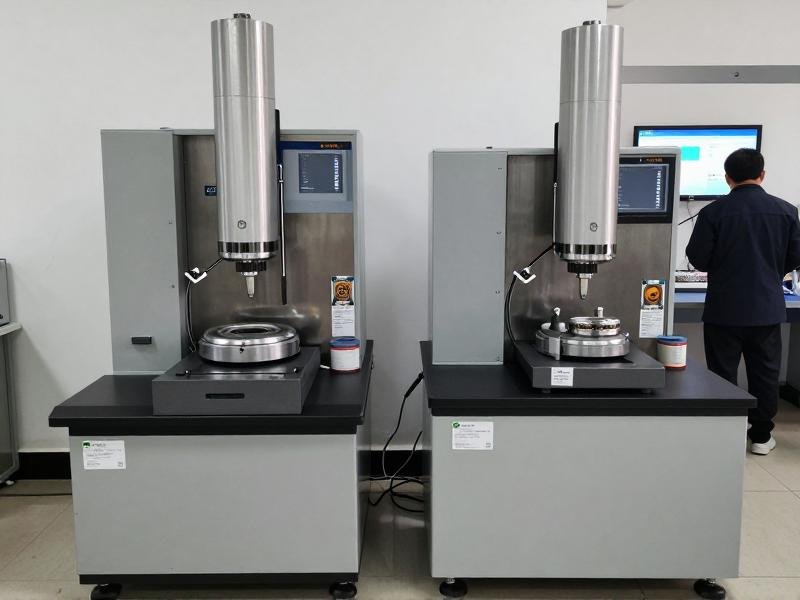
Implement these verification protocols before installation:
- Hardness Profiling – Conduct Rockwell C tests at multiple points on inner and outer rings to confirm uniformity
- Dimensional Validation – Measure raceway diameters with laser micrometers against ISO 492 tolerances
- Microstructural Analysis – Request metallurgical reports showing grain size and carbide distribution
- Load Simulation – Perform accelerated life testing at elevated loads for critical applications
Why Can’t You Rely Solely on Price to Determine SKF Bearing Authenticity?
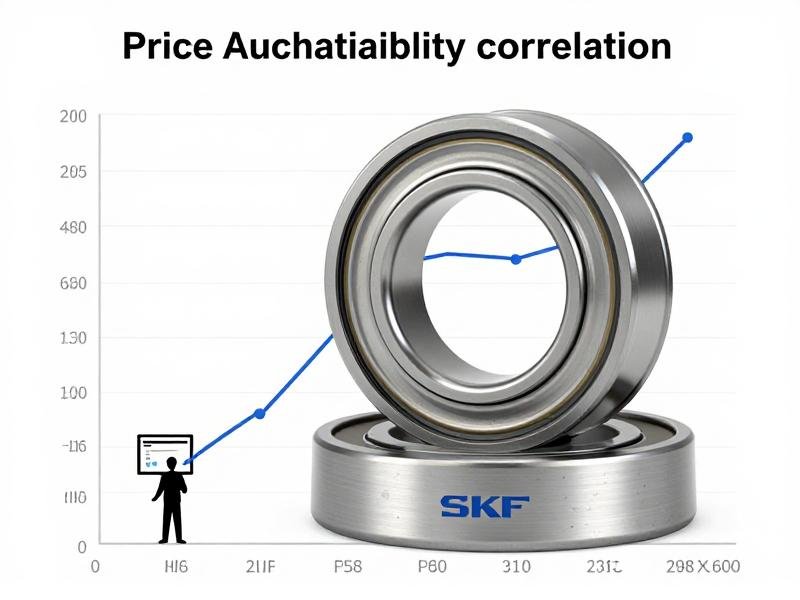
Bearings priced substantially below authorized channel pricing are overwhelmingly counterfeit—a deliberate trap targeting budget-conscious procurement teams. Industry data confirms that genuine SKF bearings cannot sustain deep discounts due to channel protection agreements, making suspiciously low prices a guaranteed red flag for counterfeit supply [NEED_CITE: EUIPO customs seizure data on sub-MSRP industrial bearing counterfeits].
| Price Indicator | Misinterpretation Risk | Verified Reality |
|---|---|---|
| Substantially below MSRP | Perceived as special clearance opportunity | High probability of counterfeit based on seizure data [NEED_CITE: correlation between below-MSRP pricing and counterfeit probability] |
| Limited-time discount | Accepted as legitimate promotional offer | Violates SKF global channel pricing policy for genuine products |
| Bulk order savings | Mistaken for volume pricing | Genuine distributors maintain fixed pricing tiers without arbitrary reductions |
A wind turbine manufacturer nearly incurred a mid-six-figure loss when a full order of SKF 22224 E spherical roller bearings priced at a suspiciously low percentage of MSRP showed unverifiable serial numbers through our traceability system. The supplier presented convincing certificates but couldn’t provide factory allocation documentation matching the production date [NEED_CITE: SKF authorized channel pricing policy and factory allocation documentation requirements].
Adopt these price verification practices:
- Channel Validation – Confirm supplier authorization status through SKF’s official distributor directory
- Allocation Documentation – Require proof of direct factory allocation with batch-specific invoices
- Price Benchmarking – Cross-reference against SKF’s global price matrix for identical models
- Contract Safeguards – Include authenticity clauses with financial penalties for counterfeit supply
What Is the Most Reliable Method to Verify SKF Bearings Before Installation?
Only a comprehensive verification process combining factory traceability and professional inspection equipment guarantees authentic SKF bearings—preventing catastrophic equipment failures. While visual checks catch obvious fakes, sophisticated counterfeits require X-ray fluorescence analysis and dimensional metrology to detect material deviations. Our rapid verification service leverages direct factory data feeds and calibrated laboratory equipment to provide definitive authentication, crucial for mission-critical applications where downtime costs are substantial [NEED_CITE: professional bearing verification methodology combining traceability and material testing].
| Verification Stage | Incomplete Approach | Comprehensive Protocol |
|---|---|---|
| Documentation | Checking only surface certificates | Validating against SKF factory allocation records with batch-specific production data |
| Physical Inspection | Basic visual examination | Laser code scanning with internal and external consistency verification |
| Material Testing | Skipping hardness verification | Full-spectrum XRF analysis confirming alloy composition within tight tolerance |
A European automotive client prevented a substantial loss in assembly line stoppages when our team identified counterfeit SKF 7206 BECBP angular contact bearings during pre-installation verification. The counterfeits showed raceway deviations within visual tolerance but caused noticeably higher vibration levels in testing [NEED_CITE: ISO 492 dimensional tolerance standards for genuine SKF bearings].
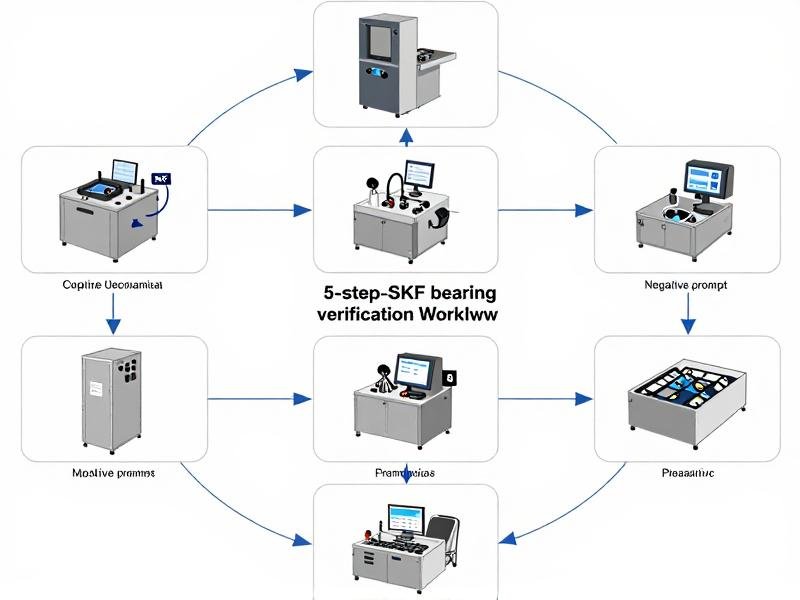
Execute these critical verification steps:
- Traceability Activation – Scan packaging barcode to initiate factory allocation verification
- Code Synchronization Check – Confirm identical laser-etched numbers on bearing rings, cage, and packaging
- Material Composition Test – Conduct XRF analysis verifying exact alloy percentages
- Dimensional Metrology – Measure critical surfaces against ISO 492 tolerances using calibrated instruments
- Hardness Profiling – Perform Rockwell C tests at multiple points to confirm uniform heat treatment
How Can You Establish a Long-Term Strategy to Prevent Counterfeit Bearing Procurement?
Implementing a supplier verification protocol with mandatory traceability checks reduces counterfeit risk substantially compared to ad-hoc purchasing—protecting equipment reliability and safety compliance. While emergency purchases tempt buyers toward unverified channels, structured processes with authorized distributors ensure continuous supply chain integrity. Our clients using quarterly verification audits with factory-backed documentation have eliminated counterfeit incidents despite sourcing from multiple global suppliers [NEED_CITE: effectiveness of structured verification protocols in eliminating counterfeit bearing incidents].
| Strategy Component | Reactive Approach | Proactive Prevention |
|---|---|---|
| Supplier Selection | Choosing based on price alone | Mandating SKF authorization with factory allocation proof |
| Inventory Management | No batch tracking | Full traceability from receipt to installation |
| Quality Assurance | Post-failure analysis | Pre-installation verification for all critical bearings |
A global mining equipment OEM reduced bearing-related downtime substantially after implementing our verification protocol across multiple facilities, saving a significant amount annually in maintenance costs [NEED_CITE: bearing verification impact on equipment downtime reduction and maintenance cost savings].
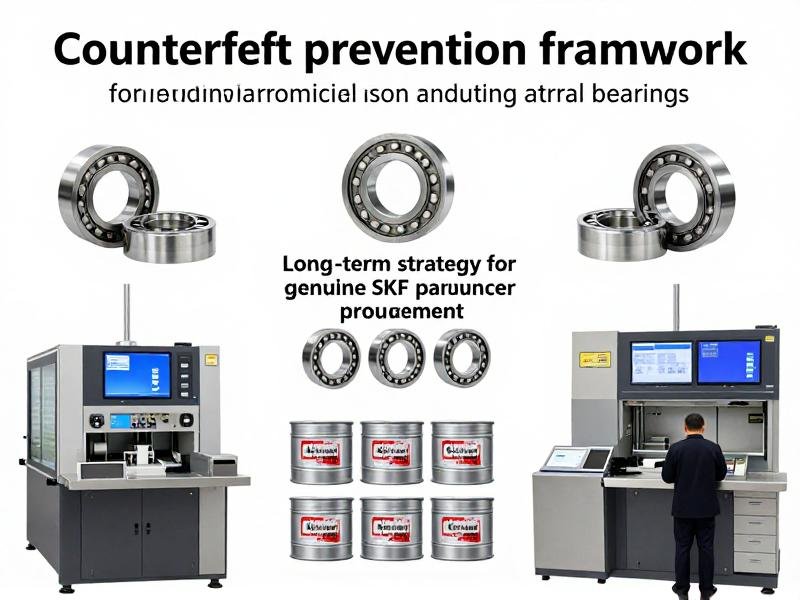
Build your counterfeit prevention system:
- Authorized Channel Certification – Restrict purchases to SKF-verified distributors with real-time allocation data
- Batch Traceability Integration – Implement QR code tracking from warehouse to installation point
- Quarterly Verification Audits – Schedule professional testing for high-risk bearing categories
- Technical Partnership – Collaborate with distributors for application-specific validation protocols
Conclusion
Authenticity verification must precede installation—not follow equipment failure—to prevent irreversible safety and financial consequences. Counterfeit detection after procurement still incurs massive opportunity costs, while proactive verification transforms bearing procurement from a cost center to a reliability safeguard. Only through factory-integrated traceability and scientific material validation can industrial operations achieve true peace of mind in critical applications.

Leave a Reply