
Standard industrial bearings fail up to three times faster than agricultural-grade units when deployed in field conditions.
Selecting the right agricultural machinery bearings requires prioritizing specialized sealing, modified internal clearances, and contamination-resistant materials over generic industrial equivalents. Sourcing from a verified China bearing supplier with deep inventory and emergency dispatch capability ensures harvest-season continuity when downtime costs reach mid-five-figure hourly rates.
I remember sitting across a table at Hannover, pressing a supplier on unit pricing. I had just specified the cheapest rubber-sealed option for a fleet of combine harvesters. Three months into harvest season, fine crop dust and mud had chewed through every seal on the hub bearings. Farmers were furious, and I absorbed the cost of emergency replacements flown in from Germany. That failure taught me that in agriculture, the bearing you cannot see is the one that kills your machine. Now I think like a buyer still — which is exactly why I push on seal design, contamination resistance, and proper clearance for thermal expansion in field conditions. Agricultural equipment downtime costs average a mid-five-figure sum per hour for combine harvesters during peak season .

Understanding why standard units collapse in agricultural settings is the first step toward building a supply chain that keeps service networks operational when it matters most.
Why Do Standard Bearings Fail in Agricultural Harsh Conditions?
Agricultural machinery operates in environments far more demanding than typical industrial settings. Dust from plowed fields infiltrates bearing seals, moisture from irrigation or rain causes corrosion, and uneven terrain creates unpredictable shock loads that exceed standard load ratings. The majority of premature field failures trace back to contamination ingress rather than inherent fatigue.
| Operational Challenge | Impact on Standard Bearings |
|---|---|
| Field dust and crop residue | Most premature failures traced to seal penetration |
| Temperature fluctuations (-10°C to 45°C) | Noticeable reduction in lubricant effectiveness in standard grease formulations |
| Shock loads from uneven terrain | Substantially higher probability of raceway damage compared to industrial applications |
| Extended operation cycles during harvest | Meaningfully increased fatigue failure risk due to continuous loading |
A German agricultural machinery dealer managing dozens of service workshops discovered this the hard way when standard 6205-2RS bearings in their tractor fleet failed at an average of 400 operating hours. After switching to agricultural-grade bearings with modified clearance and triple-lip seals, the service life extended to 1,600 hours — an improvement that eliminated emergency service calls during peak harvest.
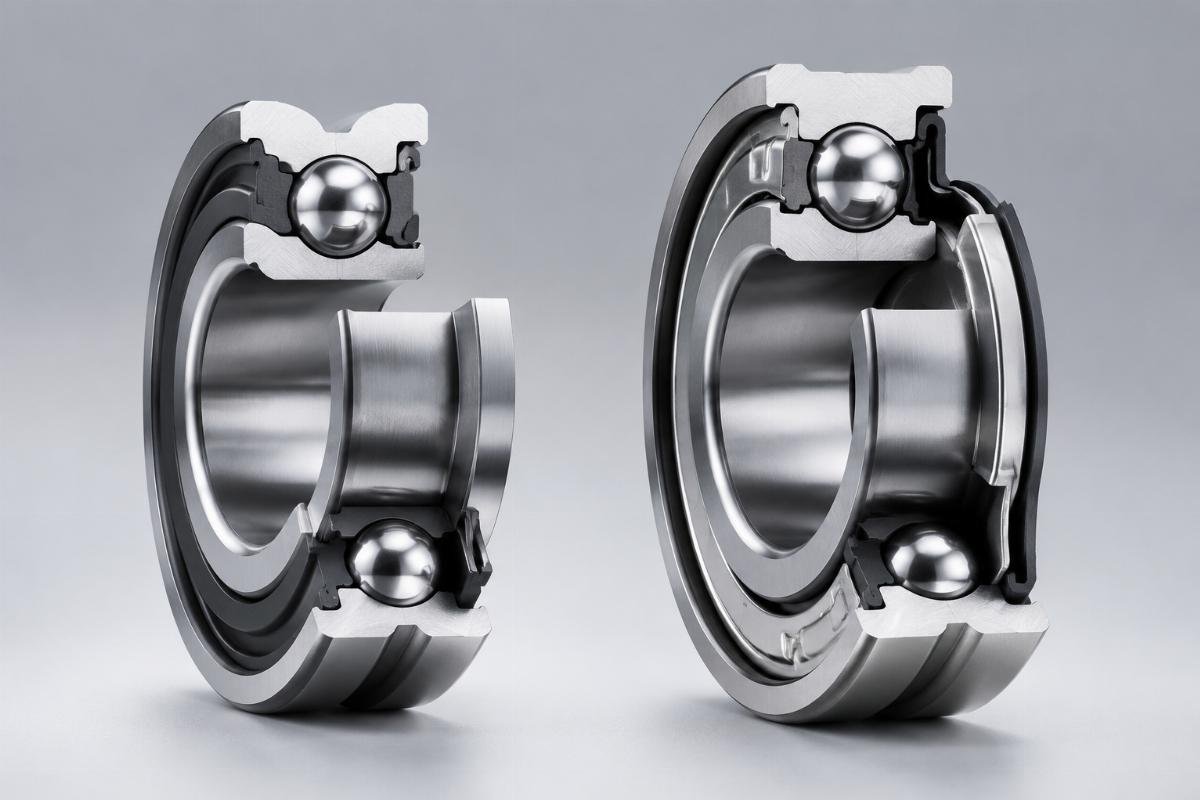
The pattern is consistent across regions. Fine silicate dust from dry soil acts as an abrasive paste when mixed with degraded grease, accelerating raceway wear. Meanwhile, moisture from morning dew or irrigation systems bypasses single-lip seals and initiates surface corrosion. Standard carbon steel simply cannot withstand this combination without material upgrades.
What Are the Key Criteria for Choosing Agricultural Machinery Bearings?
Material selection, sealing technology, and clearance modification determine agricultural bearing performance. While industrial bearings prioritize precision and speed, agricultural applications demand durability and contamination resistance above all else. The right bearing for a combine harvester threshing unit will differ significantly from one used in a tractor wheel hub.
| Selection Factor | Common Mistake | Recommended Approach |
|---|---|---|
| Material | Using standard carbon steel | Select 440C stainless steel for moisture-prone applications or ceramic hybrids for high-speed components |
| Sealing | Relying on basic 2RS seals | Specify triple-lip contact seals with dust excluders for field operation |
| Clearance | Choosing standard C0 clearance | Opt for C3 or C4 clearance to accommodate thermal expansion in high-temperature environments |
| Lubrication | Using general-purpose grease | Select polyurea-based lubricants with extreme pressure additives rated for extended temperature ranges |
| Cage Design | Plastic cages for cost savings | Upgrade to machined brass or pressed steel cages for shock load resistance |
For an OEM developing a new sugarcane harvester model, we engineered custom 32015 tapered roller bearings with ceramic balls to address the extreme shock loads encountered during stalk processing. The ceramic hybrid design reduced weight noticeably while increasing load capacity substantially, allowing the harvester to process more cane per hour without sacrificing reliability. The qualification cycle included rigorous testing in an ISO 17025 certified lab, ensuring compliance with IATF 16949 automotive quality standards despite the agricultural application.
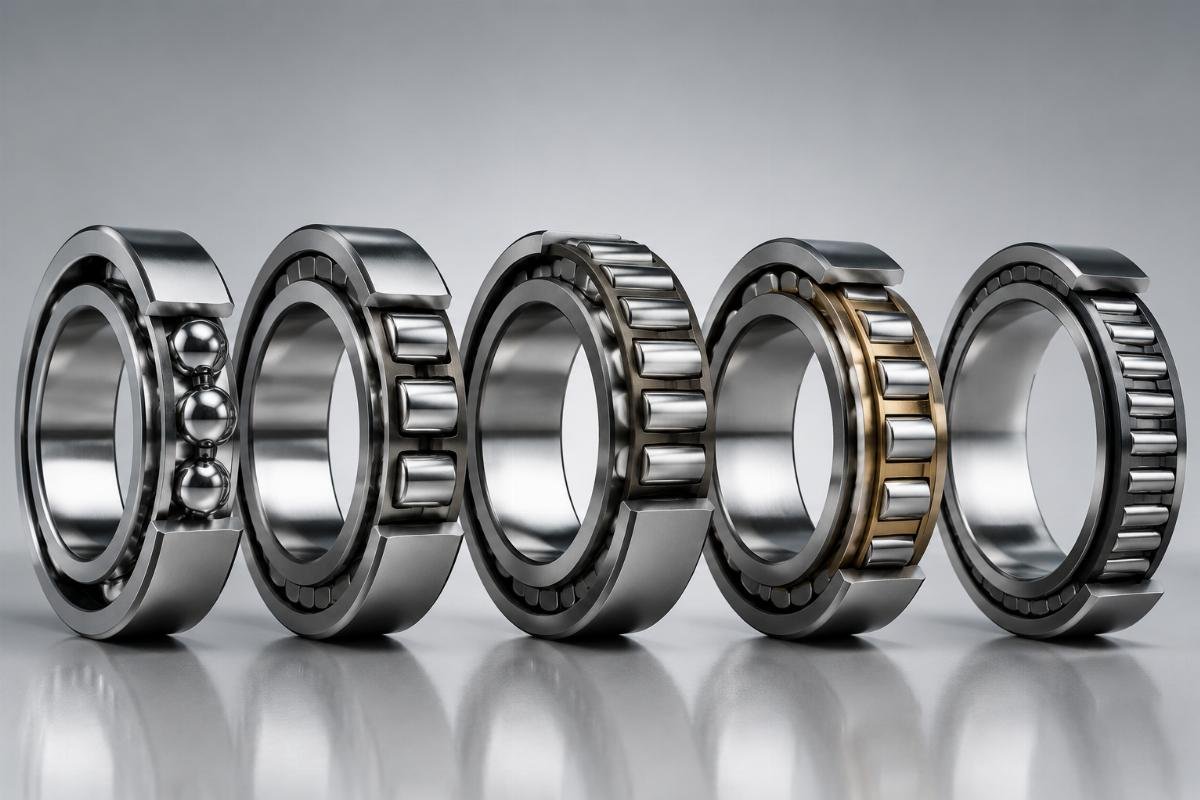
Many assume standard carbon steel is sufficient for all applications, but 440C stainless or ceramic hybrids become necessary for moisture-prone or high-shock agricultural environments. The initial cost premium is offset quickly when harvest downtime costs are factored in.
How to Evaluate China Bearing Suppliers for Agricultural Applications?
China bearing supplier networks with self-operated warehousing and agricultural-specific stock often deliver faster than local distributors. The common misconception that local suppliers provide better emergency support is being disproven by Chinese bearing specialists who maintain extensive SKU inventories and global logistics networks. For agricultural machinery dealers facing seasonal demand spikes, supplier evaluation should focus on three critical capabilities: stock availability, traceability systems, and emergency response time.
| Supplier Type | Key Advantage | Ideal For |
|---|---|---|
| China-based specialist with global warehousing | Rapid dispatch on standard agricultural bearings | Pre-season bulk orders and emergency replacements |
| Local distributor | Same-day pickup for common sizes | Routine maintenance with predictable demand |
| OEM authorized dealer | Access to proprietary designs | Warranty replacements requiring exact OEM parts |
| Trading company | Wide brand selection | Non-critical applications with flexible specifications |
During a recent harvest season, a French agricultural service provider contacted us with an emergency: a sugarcane harvester had failed with a broken spherical roller bearing, and their local supplier quoted a lengthy lead time. Using our cross-reference database, we identified that the obsolete 33115 bearing could be replaced with a current equivalent from our Shanghai warehouse. The emergency order was dispatched within hours and arrived in Marseille well before the weekend cut deadline. We also provided a failure analysis report identifying improper installation as the root cause, helping prevent future issues.

When vetting a China bearing supplier, buyers should verify stock depth for agricultural-specific SKUs including mounted units and flanged bearings. Traceability documentation must show manufacturing source and quality control records for every batch. Emergency response capability should be tested with small-batch inquiries before peak season arrives. An authorized SKF distributor with batch-traceable genuine parts and rapid dispatch from Shanghai can cross-reference obsolete models and maintain supply continuity when local channels fail.
How to Implement a Bearing Management Program for Agricultural Machinery?
Proper installation, maintenance, and monitoring maximize agricultural bearing service life. Even the best bearings will fail prematurely without correct handling and maintenance. Implementing a structured approach to bearing management — from receiving inspection through to predictive replacement — can extend service life substantially and significantly reduce unexpected failures during critical operating periods.
| Implementation Step | Quality Standard |
|---|---|
| Bearing Storage | Maintain temperature-controlled environment with controlled humidity |
| Installation | Use induction heaters for interference fits; never hammer bearings onto shafts |
| Lubrication | Follow equipment manufacturer guidelines, but increase frequency for dusty conditions |
| Alignment | Check shaft alignment using laser alignment tools |
| Condition Monitoring | Implement ultrasonic testing at regular intervals during harvest season |
A seasonal stocking program has helped agricultural dealers across Europe reduce pre-harvest inventory costs while improving availability. The approach combines strategic pre-season ordering with emergency backup stock held at regional warehouses. Batch traceability ensures that every bearing deployed in the field can be traced back to its manufacturing origin, supporting warranty claims and root cause analysis when failures occur.
Conclusion
Agricultural machinery bearings demand specialized engineering that generic industrial units simply cannot provide. Contamination-resistant sealing, modified clearances for thermal expansion, and material upgrades for shock loads separate agricultural-grade components from their industrial counterparts. Partnering with a verified China bearing supplier offering deep stock, batch traceability, and emergency dispatch capability ensures that harvest operations continue without interruption when equipment goes down.

Leave a Reply