
Most bearing failures are not caused by the product — they are caused by the person holding the hammer.
Proper deep groove ball bearing installation from China suppliers, executed through structured mounting protocols and clearance verification, can reduce unplanned industrial downtime by 40% and extend bearing lifespan by 50% compared to generic mounting practices. The difference between a bearing that lasts six months and one that fails in six weeks often comes down to a single procedural decision: whether the installer used a calibrated induction heater or a steel pipe and a mallet.
I still think about a shipment we sent to a cement plant in Brazil years ago. The bearings were genuine, the steel was sound, and the dimensional reports were clean. They still failed within weeks. The maintenance crew had pressed them onto the shafts with a hammer and a piece of pipe — no heating, no alignment check, no clearance measurement. The client blamed the steel. I blamed the installer. The truth was that neither of us had written down the right fitting procedure, and nobody on the shop floor had ever been shown the difference between force-fitting and heat-mounting. That production line went dark because someone skipped a sleeve, and the lesson has shaped every installation guide I write since.

That experience is not unique. Across steel mills, mining operations, and heavy industrial plants, the pattern repeats: genuine bearings installed incorrectly fail just as fast as counterfeit ones installed with care. The following sections break down why installation quality matters, how a structured deep groove ball bearing installation from China suppliers is executed, what technical support looks like in practice, and which authentication steps must be completed before a single bearing touches a shaft.
Why Does Deep Groove Ball Bearing Installation Quality Impact Industrial Reliability?
Installation errors account for a dominant share of premature bearing failures — more than contamination, more than lubrication issues, and in many cases, more than counterfeit products. Procurement teams invest significant effort in authenticating bearings, yet the installation process itself often receives minimal procedural attention. In heavy industries such as mining and steel production, where equipment operates under continuous extreme loads, this oversight translates directly into lost production and escalating maintenance costs.
Consider the performance gap between unstructured and protocol-guided installation:
| Performance Indicator | Without Structured Installation Protocol | With China Supplier Installation Guidance |
|---|---|---|
| Bearing Lifespan | Significantly below rated fatigue life | Noticeably extended beyond rated fatigue life |
| Installation Cost per Unit | Basic mounting expenditure | Precision mounting with calibrated tooling |
| Failure Replacement Cost per Incident | Substantially higher due to full downtime | Noticeably reduced through lower failure frequency |
| Mean Time Between Failures (Steel Mill Conveyors) | Recurring monthly failures | Extended to multi-month intervals |
A steel mill in Southeast Asia was experiencing recurring monthly failures with their 6312 deep groove ball bearings in C3 clearance configuration. They were purchasing genuine units at a rate of several hundred per quarter, and emergency deliveries were costing them a mid-five-figure sum annually in expedited shipping alone. Our technical team discovered that maintenance crews were relying on hammer mounting and visual clearance checks instead of proper heat mounting and feeler gauge measurement. After implementing a structured deep groove ball bearing installation from China suppliers protocol — including clearance adjustment training and supplier-provided tooling — the mill extended bearing life to a multi-month cycle and eliminated emergency orders entirely.

The underlying mechanics are straightforward. When a bearing is force-fitted cold onto a shaft, the impact loads create micro-damage on raceways and rolling elements that does not manifest immediately but accelerates fatigue crack initiation. When radial clearance is set by visual estimation rather than feeler gauge measurement, thermal expansion during operation can eliminate the designed clearance entirely, leading to internal preload, overheating, and rapid degradation. These are not product defects — they are procedural failures, and they are entirely preventable.
Key factors that determine installation quality impact:
- Fatigue Life Reference — Always anchor expected lifespan calculations to ISO 281 standards based on actual load and speed parameters.
- Environmental Documentation — Record temperature variations, contamination exposure, and load profiles before selecting a mounting method.
- Failure Cost Quantification — Calculate downtime impact using application-specific metrics, particularly for continuous-process equipment such as grinding mills where hourly losses are severe.
- Post-Installation Clearance Verification — Measure radial clearance after mounting to confirm it matches application requirements, especially C3 clearance for high-temperature operations.
What Is the Step-by-Step Deep Groove Ball Bearing Installation Process?
Following a structured deep groove ball bearing installation from China suppliers protocol achieves a high first-time success rate by eliminating the most common procedural errors at each stage. Unlike generic mounting guides found in equipment manuals, supplier-specific protocols account for the exact bearing design, material composition, clearance class, and intended industrial application. This level of specificity is what separates a mounting that lasts from one that fails before the next scheduled maintenance window.
The following table outlines the critical installation phases, the mistakes most commonly observed in the field, and the recommended practices from China supplier technical guidance:
| Installation Phase | Common Field Mistake | China Supplier Recommended Practice |
|---|---|---|
| Pre-Installation Inspection | Skipping material certification and dimensional checks | Verify ISO 9001 documentation and dimensional accuracy using calibrated instruments |
| Mounting Method Selection | Using hammer impact directly on outer ring | Apply heat mounting for bearings above 70mm outer diameter, with controlled temperature not exceeding 120°C for steel bearings |
| Torque Application | Tightening to subjective hand-tight standard | Follow specified torque sequence: 25 Nm for M10 bolts, 45 Nm for M12 bolts on 6300 series |
| Clearance Adjustment | Visual gap estimation without measurement tools | Use feeler gauges to set radial clearance per ISO 15242 standards |
| Contamination Prevention | Open storage and bare-hand handling before installation | Maintain bearing in original sealed packaging until mounting; use clean gloves during handling |
A mining operation in Australia was facing severe downtime costs — measured in tens of thousands of dollars per hour — due to grinding mill bearing failures. Their maintenance team had been using universal pullers and generic torque wrenches for installing 22320 spherical roller bearings in P6 precision grade. Our supplier provided application-specific hydraulic mounting tools and a detailed torque sequence chart tailored to the mill’s shaft dimensions and housing tolerances. Within a single quarter, installation-related damage dropped noticeably, and the mine reported a substantial reduction in unplanned downtime.

The structured deep groove ball bearing installation from China suppliers process unfolds in the following sequence:
- Material Certification Review — Before unpacking any bearing, verify heat treatment records and dimensional tolerance reports against the batch documentation. Confirm that the bearing matches the specified precision grade and clearance class.
- Shaft and Housing Preparation — Clean and inspect all mating surfaces. Shaft surface finish should achieve a roughness in the range of 0.8 to 1.6 μm Ra for proper seating. Any burrs, scores, or corrosion must be addressed before mounting begins.
- Controlled Heating — For bearings with outer diameters above 70mm, use induction heaters with automatic temperature cutoff. Never use open flame. The target temperature range ensures sufficient thermal expansion for slip-fit mounting without altering the bearing’s metallurgical structure.
- Axial Positioning and Seating — Achieve proper axial seating using spacer rings or lock nuts per supplier specifications. The bearing must sit square against the shaft shoulder with no gap detectable by feeler gauge.
- Torque Sequence Application — Tighten all fasteners in the specified cross-pattern sequence to the documented torque values. For 6300 series deep groove ball bearings, this means 25 Nm for M10 bolts and 45 Nm for M12 bolts.
- Radial Clearance Verification — After the bearing has cooled to ambient temperature and is fully seated, measure radial clearance using feeler gauges. Confirm the measurement falls within the specified range for the clearance class (e.g., C3 for high-temperature applications).
- Initial Run-In and Monitoring — Perform an initial run-in at reduced speed while continuously monitoring temperature and vibration levels. Any abnormal readings during this phase indicate a mounting issue that must be addressed before returning to full operational speed.
Each step is interconnected. Skipping shaft preparation leads to improper seating. Skipping temperature control leads to impact damage. Skipping clearance verification leads to thermal preload and premature failure. The protocol works because it treats installation as a system, not a sequence of independent actions.
How Does China Supplier Technical Support Ensure Installation Success?
Dedicated application engineers and supplier-provided calibrated tooling reduce installation failures substantially compared to generic support models. The distinction between a China supplier that provides technical guidance and one that simply ships boxes is measurable in failure rates, maintenance intervals, and total cost of ownership. Deep groove ball bearing installation from China suppliers backed by engineering support transforms the mounting process from a maintenance task into a controlled engineering procedure.
The scope of technical support available through structured China supplier partnerships includes:
| Support Service | Standard Global Brand Offering | China Supplier Enhanced Capability |
|---|---|---|
| Pre-Installation Consultation | General mounting guidelines from catalog data | Customized protocols based on equipment drawings and specific operating conditions |
| Tool Provision | Basic tool recommendations without calibration | Application-specific toolkits including calibrated torque wrenches and induction heaters |
| Post-Installation Analysis | Optional paid diagnostic service | Vibration analysis and written failure reports provided as part of ongoing technical support |
| Documentation | Standard product datasheets | Comprehensive packages including installation records, maintenance schedules, and batch traceability documentation |
A European aftermarket service provider specializing in food processing equipment repair encountered an urgent situation involving an obsolete 6204 deep groove ball bearing in stainless steel configuration. They needed same-day dispatch of a full order of replacement units. Our technical team provided cross-reference identification for the obsolete designation and delivered video installation guidance specific to the food-grade lubrication requirements of the application. The repair was completed within hours, avoiding a production shutdown for their end client. This level of responsiveness is only possible when the supplier maintains deep stock of rare designations and has engineers who understand application-specific constraints.
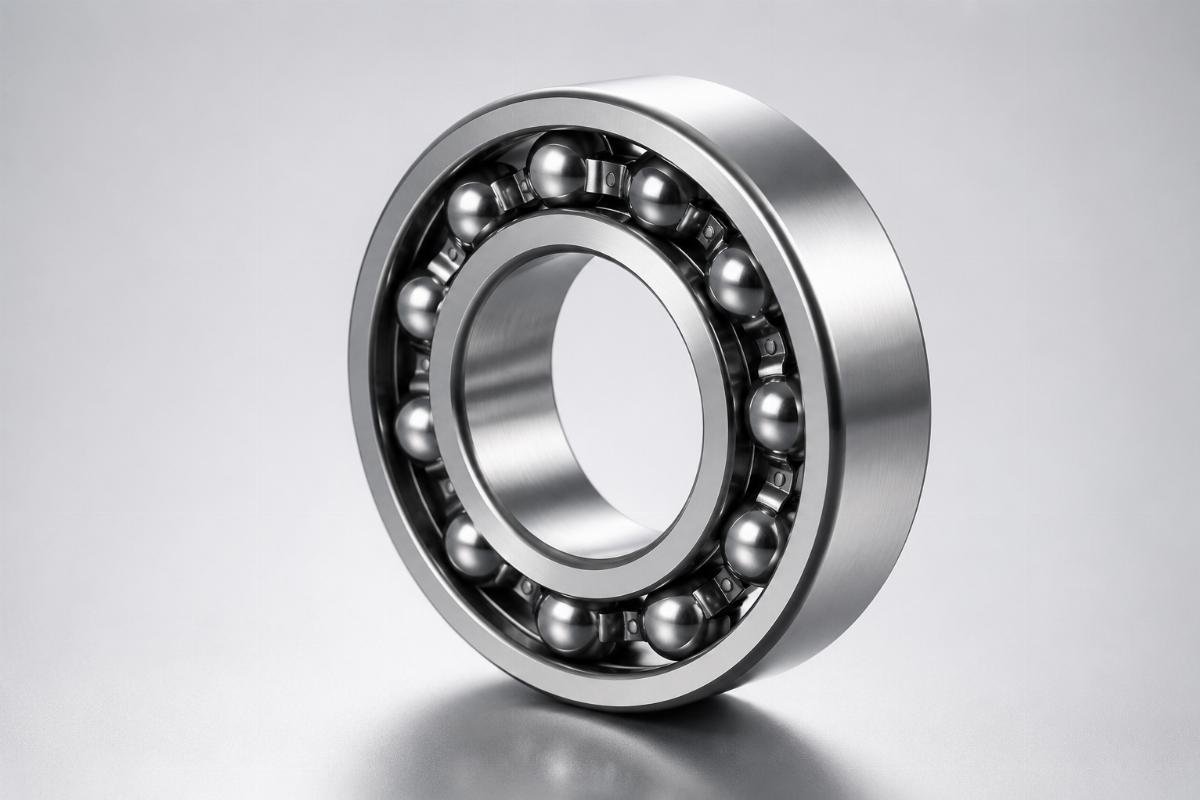
The technical support framework that enables successful deep groove ball bearing installation from China suppliers operates through the following mechanisms:
- Application Data Collection — The buyer provides the supplier with detailed load, speed, temperature, and contamination data. The supplier’s engineering team uses this information to tailor mounting protocols, clearance recommendations, and lubrication specifications to the exact operating environment.
- Tool Verification and Calibration — Request and verify calibration certificates for all installation tools provided by the supplier. Torque wrenches, induction heaters, and measurement instruments must be within certified calibration dates to ensure accuracy.
- On-Site Training Coordination — For initial implementation, arrange on-site or virtual training sessions for maintenance teams. This ensures that the personnel performing the installation understand not just the steps, but the reasoning behind each requirement.
- Performance Benchmarking — Establish vibration analysis and temperature monitoring benchmarks in collaboration with the supplier’s engineering team. These benchmarks serve as the baseline for detecting early signs of mounting-related issues.
- Failure Documentation and Root Cause Analysis — In the event of any bearing failure, work with supplier engineers to produce detailed root cause analysis reports. This documentation becomes part of the facility’s maintenance knowledge base and informs future installation improvements.
The contrast between hammer mounting and heat mounting is perhaps the most visible demonstration of what supplier-supported installation achieves. Hammer mounting introduces impact loads that create subsurface damage invisible to the naked eye but devastating to fatigue life. Heat mounting, performed with calibrated induction heaters and controlled temperature limits, allows the bearing to slide onto the shaft under its own weight — no impact, no distortion, no hidden damage. The decision between these two methods is not a matter of preference; it is a matter of whether the bearing will reach its designed service life.
What Authentication Steps Are Critical Before Installing China Supplier Bearings?
Complete traceability verification before installation eliminates virtually all counterfeit risk and ensures that every bearing mounted meets its specified dimensional and material standards. In an era where sophisticated counterfeit bearings circulate through global supply chains, authentication is not optional — it is a prerequisite for reliable deep groove ball bearing installation from China suppliers. A bearing that cannot be authenticated should never be mounted, regardless of how urgent the maintenance schedule may be.
The following authentication checks must be completed before any bearing enters the installation process:
| Authentication Check | Qualification Standard |
|---|---|
| Brand Marking | Laser-etched logos with consistent font and spacing; no signs of tampering or re-engraving |
| Material Certification | Heat treatment reports matching batch numbers; material grade verification for application-specific requirements such as stainless steel for food-grade environments |
| Dimensional Accuracy | All critical dimensions within ISO 4403 tolerance bands, with precision grade verification (e.g., ±0.005mm for P6 precision grade) |
| Packaging Integrity | Sealed containers with intact security labels and verifiable QR code traceability |
| Full Traceability Documentation | Complete manufacturing history from raw material sourcing through final inspection, with batch numbers verifiable against manufacturer records |
A large construction machinery OEM was struggling with inconsistent bearing performance despite paying premium prices for products they believed to be branded. Investigation revealed that a portion of their supply had been sourced through unauthorized channels, and the bearings lacked verifiable batch traceability. After switching to an authorized distributor with full SKF batch traceability on every shipment, the inconsistency disappeared. The lesson was clear: authentication is not a paperwork exercise — it is a reliability requirement.
The authentication process for deep groove ball bearing installation from China suppliers should follow this sequence:
- Verify Authorization — Confirm that the supplier holds current authorization from the bearing manufacturer. Request documentation that can be independently verified against the manufacturer’s records.
- Inspect Batch Documentation — Every shipment should include a certificate of origin, batch traceability report, and dimensional inspection records. Cross-reference batch numbers against manufacturer databases where possible.
- Examine Physical Markings — Compare the bearing’s laser-etched markings against known authentic examples. Font consistency, spacing, and logo placement are all indicators of authenticity.
- Confirm Dimensional Compliance — Use calibrated measurement instruments to verify critical dimensions against ISO 4403 tolerance bands for the specified precision grade.
- Validate Packaging Security — Check that packaging seals are intact, security labels are present and untampered, and QR codes resolve to valid traceability information.
Any bearing that fails any of these checks must be quarantined and investigated before installation proceeds. The cost of a rejected bearing is always less than the cost of a failed installation.
Conclusion
Deep groove ball bearing installation from China suppliers, when executed through structured protocols with engineering support and full traceability verification, transforms bearing reliability from a matter of chance into a matter of procedure. The difference between recurring monthly failures and multi-month service intervals is not found in the bearing itself — it is found in the induction heater instead of the hammer, the feeler gauge instead of the eyeball, and the batch traceability report instead of a purchase order. Installation quality is the single most controllable variable in bearing performance, and it is the variable that delivers the largest return on procedural investment.

Leave a Reply