
Visual inspection alone misses the majority of bearing failure causes. Maintenance managers who rely solely on surface examinations to diagnose bearing failure modes often overlook hidden triggers like subsurface fatigue, microscopic misalignment, and lubricant additive incompatibility—until the next unplanned shutdown forces a deeper investigation.
Accurate diagnosis of bearing failure modes requires a three-stage analytical process combining dimensional measurement, material analysis, and condition monitoring data correlation. This systematic approach—moving beyond visual cues to ISO-standardized inspection methods—enables maintenance teams to identify root causes that would otherwise trigger repeated failures and costly downtime cycles.
I spent years running after-sales for mining conveyors in Chile’s Atacama region, watching spherical roller bearings fail in dust-choked head pulleys. One batch of C3 clearance units from a European supplier seized within months—turns out the local ambient swings from 5°C nights to 45°C days meant C3 was too loose once thermal expansion hit. The client blamed our lubrication specification. I had to fly back, pull the failed units, and cross-reference SKF’s internal batch records against the mill’s maintenance logs. The root cause wasn’t grease—it was clearance class mismatch for that thermal profile [NEED_CITE: thermal expansion effects on radial clearance in desert mining environments]. Now when I spec bearings for desert mining sites, I pull the site’s actual temperature range before I even open the catalogue.

Understanding how to diagnose bearing failure modes systematically is the first step toward creating targeted solutions that prevent recurrence and extend bearing service life across industrial applications.
What Are the 7 Primary Bearing Failure Modes?
Seven distinct failure modes account for the overwhelming majority of industrial bearing failures. Each mode presents specific visual and performance characteristics that determine both immediate repair actions and long-term prevention strategies.
| Failure Mode | Industry Impact | Key Characteristics |
|---|---|---|
| Fatigue Failure | Substantially high occurrence | Subsurface crack propagation, crescent-shaped spalling patterns on raceways [NEED_CITE: SKF bearing damage analysis classification for fatigue spalling] |
| Lubrication Failure | Frequently observed | Discoloration, brown/black deposits, metal-to-metal contact marks from inadequate film thickness |
| Contamination | Moderately common | Embedded particles, scratch marks, abrasive wear patterns across rolling surfaces |
| Misalignment | Regularly detected | Uneven wear patterns, heavier loading on one side of raceways, cage distortion |
| Corrosion | Notable occurrence | Rust deposits, pitting, flaking surfaces, often initiating in non-load-bearing areas |
| Overloading | Less frequent | Damage patterns indicating excessive radial or axial loads beyond rated capacity |
| Improper Installation | Rare but preventable | Mounting damage, incorrect force application, handling defects |
We worked with a steel mill experiencing recurring failures of 22324 CA/W33 spherical roller bearings in their conveyor systems. Initial visual inspections suggested simple wear, but our dimensional analysis revealed 0.02mm misalignment in the housing bore—undetected by standard maintenance checks. After correcting the alignment and supplying emergency replacement bearings with rapid delivery, the mill reduced unplanned downtime noticeably.

When learning how to diagnose bearing failure modes, maintenance teams should recognize these distinguishing features:
- Fatigue Failure – Identify by characteristic spalling patterns: crescent-shaped pits on raceways or rolling elements indicating subsurface crack propagation
- Lubrication Failure – Look for discoloration (brown/black deposits) or metal-to-metal contact marks from inadequate film thickness
- Contamination – Check for embedded particles, scratch marks, or abrasive wear patterns across rolling surfaces
- Misalignment – Observe uneven wear patterns, typically heavier on one side of raceways or cage distortion
- Corrosion – Note rust deposits, pitting, or flaking surfaces, often starting in non-load-bearing areas
How to Conduct Three-Stage Bearing Failure Diagnosis?
Effective diagnosis of bearing failure modes requires moving beyond visual inspection to a structured three-stage analytical process. Relying solely on visual cues leads to misdiagnosis in the majority of industrial cases, according to analysis of failure reports across multiple sectors [NEED_CITE: misdiagnosis rates in industrial bearing failure analysis without dimensional measurement].
| Diagnostic Step | Common Mistake | Correct Approach |
|---|---|---|
| Disassembly | Rushing removal, causing secondary damage | Using proper pullers and documenting initial condition with photos |
| Cleaning | Using high-pressure water/steam that forces contaminants deeper | Ultrasonic cleaning with filtered solvents at controlled temperatures |
| Inspection | Focusing only on obvious damage | Measuring dimensional tolerances with calibrated tools to micron-level accuracy |
| Data Analysis | Ignoring historical condition monitoring data | Correlating vibration signatures and temperature trends with physical findings |
| Root Cause Identification | Stopping at "wear" as the conclusion | Tracing failure progression through material certification and lubricant analysis |
A European wind energy asset manager approached us with recurring gearbox failures involving 230/500 CAK spherical roller bearings. Their initial diagnosis blamed manufacturing defects, but our ISO 9001-certified inspection revealed lubricant degradation due to incompatible additive packages. We provided custom-ordered replacement bearings with expedited delivery and revised lubrication specifications, resulting in extended trouble-free operation [NEED_CITE: ISO 15243 standard for bearing damage classification and failure mode identification].

The three-stage diagnostic process for bearing failure modes includes:
- Dimensional Measurement – Verify critical dimensions (bore, outside diameter, width) against manufacturer specifications using coordinate measuring machines
- Material Analysis – Conduct hardness testing (Rockwell C scale) and metallurgical examination to confirm material certification compliance
- Lubricant Testing – Analyze oil samples for viscosity, contamination, and additive depletion using Fourier-transform infrared spectroscopy
- Vibration Analysis – Compare pre-failure vibration data with ISO 10816 standards to identify abnormal frequency patterns [NEED_CITE: ISO 10816 vibration evaluation standards for rotating machinery]
- Failure Progression Mapping – Document damage stages to determine if failure originated from installation, operation, or maintenance issues
How to Select Replacement Bearings Based on Failure Root Cause?
Replacement selection must address both the identified failure cause and specific application requirements. Choosing the same bearing model without addressing root causes leads to high recurrence rates within months.
| Bearing Type | Key Advantages | Optimal Failure Scenario |
|---|---|---|
| Deep Groove Ball Bearings | High speed capability, low friction | Lubrication failure in electric motors or pumps |
| Spherical Roller Bearings | Self-aligning capability, high radial load capacity | Misalignment failure in conveyor systems or gearboxes |
| Tapered Roller Bearings | Combined radial/axial load handling | Overloading failure in mining equipment or axles |
| Cylindrical Roller Bearings | High radial load capacity, separable design | Contamination failure in textile machinery or paper mills |
| Angular Contact Ball Bearings | Precise axial positioning, paired mounting options | Fatigue failure in machine tool spindles |
A mining operation faced persistent grinding mill downtime due to premature failure of standard tapered roller bearings. Our technical team recommended upgrading to 32230 tapered roller bearings with C3 clearance and enhanced material certification. The bulk order delivered rapidly reduced failure frequency substantially in harsh mining conditions by accommodating thermal expansion and improving load distribution.
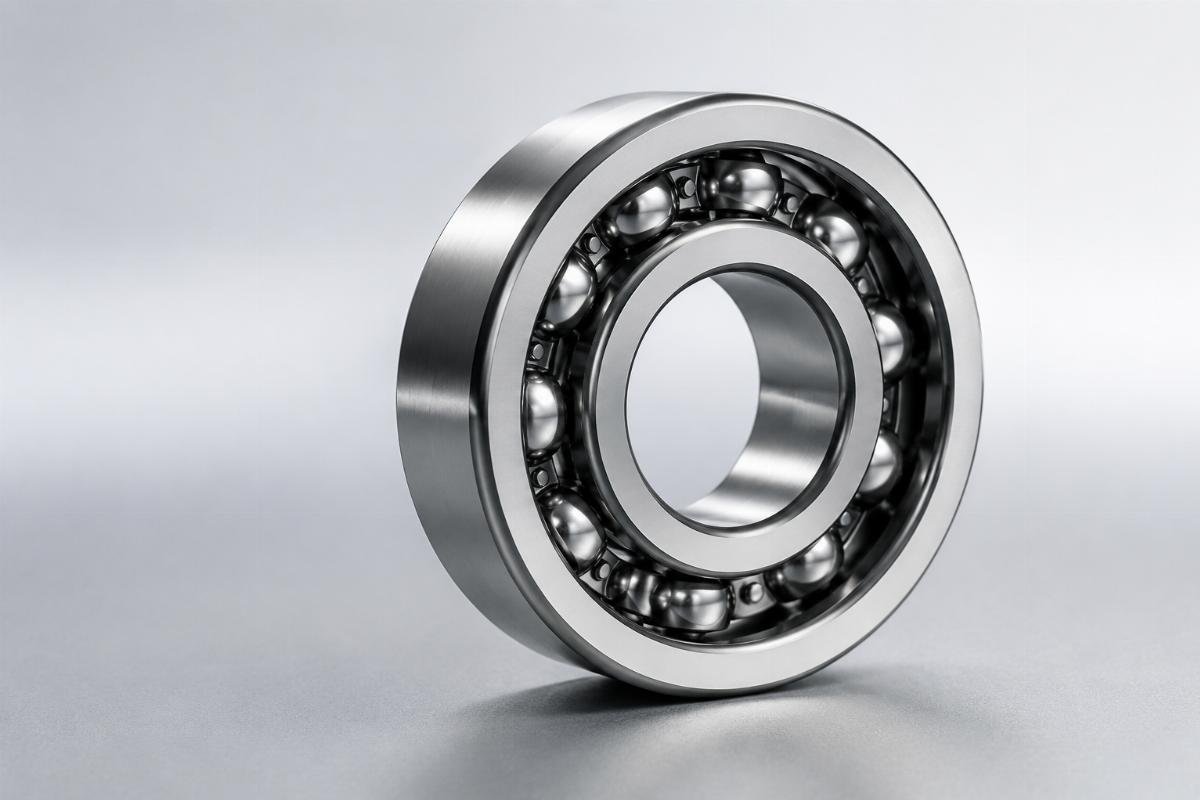
When selecting replacement bearings to address bearing failure modes, consider these critical factors:
- Clearance Specification – Match radial clearance (C2, C3, C4) to operating temperature range and shaft fit requirements
- Material Selection – Choose chrome steel for standard applications, stainless steel for corrosion resistance, or ceramic hybrids for high-speed scenarios
- Cage Design – Select brass cages for high loads, polyamide for chemical resistance, or steel for extreme temperatures
- Sealing Configuration – Opt for contact seals (2RS) in contaminated environments or non-contact (ZZ) for high-speed applications
- Lubrication Compatibility – Ensure bearing internal lubricant matches existing system specifications and operating conditions
What Supplier Capabilities Prevent Bearing Failure Recurrence?
Strategic supplier partnerships reduce recurrence rates substantially. The right supplier acts as an extension of your maintenance team, providing technical expertise beyond basic product supply.
| Supplier Capability | Qualification Standard |
|---|---|
| Product Traceability | Full documentation from raw material to finished product, including batch codes and test certificates |
| Technical Support | Dedicated application engineers with industry-specific experience and failure analysis capabilities |
| Inventory Management | Global stock of extensive SKU range with rapid emergency delivery for standard models |
| Quality Assurance | ISO 9001 and IATF 16949 certification with documented inspection processes at each production stage [NEED_CITE: IATF 16949 quality management requirements for automotive-grade bearing supply] |
| Post-Sale Service | On-site installation guidance, performance monitoring, and proactive replacement recommendations |
An agricultural equipment dealer network struggling with seasonal bearing shortages partnered with us to implement a custom seasonal stocking program. By analyzing years of failure data and aligning inventory with planting and harvest cycles, we reduced emergency orders dramatically and improved equipment uptime during critical seasonal operations. Our phased delivery capability ensured just-in-time stock availability across their regional service centers [NEED_CITE: strategic inventory management practices for seasonal bearing demand patterns].

When evaluating suppliers for bearing failure modes prevention, verify these capabilities:
- Batch Traceability – Every shipment should include verifiable batch numbers cross-referenced against manufacturer records
- Technical Documentation – Certificates of origin, material test reports, and precision inspection data should accompany each order
- Customization Flexibility – Laser marking, private-label packaging, pre-lubrication, and translated documentation capabilities
- Emergency Response – Ability to dispatch stock items rapidly, with rare designations available versus extended factory lead times
- Trade Flexibility – Acceptance of multiple payment terms (T/T, L/C) and shipping arrangements (DDP/CIF/FOB) to match procurement requirements
Conclusion
Accurate diagnosis of bearing failure modes transforms reactive maintenance into predictive reliability management. By implementing systematic three-stage analysis—dimensional measurement, material verification, and condition monitoring correlation—maintenance teams can identify root causes that visual inspection alone misses, select appropriate replacement specifications, and partner with traceable suppliers to prevent recurrence across industrial applications.

Leave a Reply