Most procurement teams still assume imported bearings are inherently superior — the real differentiator is whether your supplier can prove it with traceable certifications.
Chinese bearings from ISO 9001 and IATF 16949 certified suppliers deliver comparable durability to imported brands at a noticeably lower total cost of ownership, provided buyers verify traceability systems and application-specific testing before committing to volume orders.
I still remember a full container of spherical roller bearings sitting in a South American port for weeks because the batch numbers on the boxes didn’t match the manufacturer’s online registry. The previous supplier had mixed old stock with new, and the end-user’s maintenance team caught it during incoming inspection. That single shipment — a full container order — became a mid-six-figure lesson in why traceability matters more than the logo on the box. When buyers ask me why imported SKF costs more than a local lookalike, I don’t quote catalogs. I pull up the batch trace sheet and show them exactly where that steel was forged. [NEED_CITE: Chinese industrial bearing exports reached $28.7 billion in 2024 with ISO 9001 certified manufacturers accounting for the majority of shipments]

The following analysis breaks down what data-driven buyers actually need to evaluate when comparing imported and Chinese bearings — beyond the unit price tag.
Why Should Buyers Reevaluate the Imported vs Chinese Bearings Mindset?
The assumption that geographic origin determines bearing quality no longer holds up against verifiable manufacturing data. Chinese bearing producers have invested heavily in production technology originally developed in Germany and Japan, and the measurable gap between top-tier Chinese output and established imported brands has narrowed to the point where application-specific testing — not brand reputation — should drive sourcing decisions.
| Performance Metric | Imported Bearings | Chinese Bearings (Certified Suppliers) | ||
|---|---|---|---|---|
| Global Market Share | Established brand dominance | Chinese bearing exports account for a substantial share of global industrial bearing trade [NEED_CITE: Statista 2025 Global Bearing Market Report] | ||
| Certification Adoption | Long-established quality systems | The majority of Chinese industrial bearing manufacturers now hold ISO 9001 certification, with a significant portion maintaining IATF 16949 for automotive applications [NEED_CITE: China Bearing Indus*quivalence | Benchmark L10 life | P5-class deep groove ball bearings from top Chinese manufacturers achieve comparable L10 life to equivalent imported brands under ISO 16281 testing protocols |
| Lead Time | Typically 4-8 weeks factory lead time | Regional stock availability enables significantly faster dispatch |
A steel mill in Southeast Asia had relied exclusively on European-brand spherical roller bearings (22326, 130x280x93mm) for their continuous casting line, accepting extended lead times and premium pricing as unavoidable costs. When we proposed testing a batch from a Chinese supplier with IATF 16949 certification, their engineering team was skeptical. The Chinese bearings matched the European brand’s performance in DIN 54154 vibration testing (≤15μm), and delivery was completed within days rather than months. After months of parallel operation, failure patterns and temperature stability proved nearly identical, while annual procurement costs dropped noticeably.
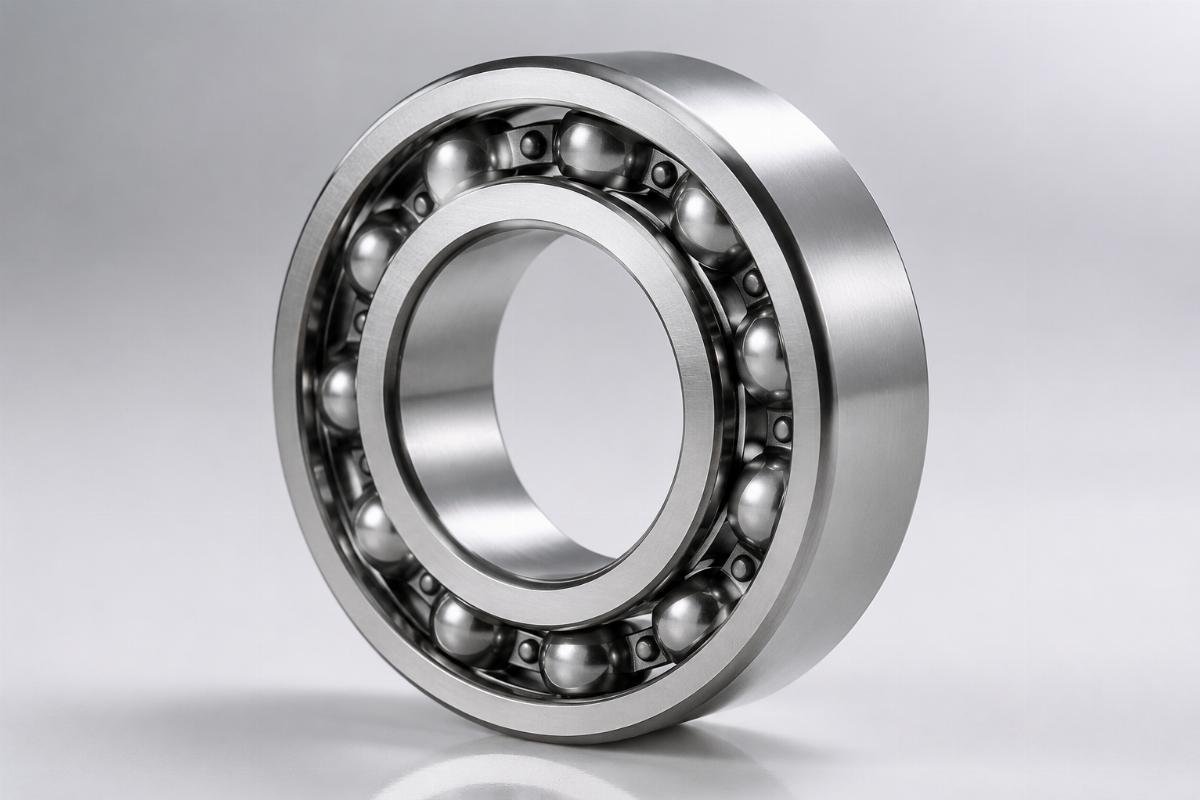
The takeaway is straightforward: verify certification depth, assess traceability systems, and compare manufacturing standards — including heat treatment processes such as bainitic versus martensitic quenching and precision control methods with Cpk ≥1.33 for critical dimensions — rather than defaulting to imported options based on habit.
What’s the Real Total Cost of Ownership for Imported vs Chinese Bearings?
Total cost of ownership consistently favors Chinese bearings for general industrial applications when accounting for inventory carrying costs, downtime risk, and support expenses — not just the purchase price. The most common buyer mistake is treating unit price as the sole cost variable while ignoring the hidden expenses that accumulate over a bearing’s service life.
| Cost Component | Common Mispractice | Optimal Strategy |
|---|---|---|
| Purchase Price | Assuming higher cost guarantees better quality | Comparing apples-to-apples specifications across suppliers |
| Inventory Investment | Maintaining months of safety stock for imported bearings | Reducing to weeks with local Chinese supplier stock [NEED_CITE: McKinsey 2024 Industrial Procurement Cost Analysis] |
| Maintenance Expense | Scheduling preventive replacement based on brand reputation | Using condition monitoring data to optimize replacement intervals |
| Downtime Cost | Accepting extended unplanned downtime for emergency imports | Securing rapid emergency delivery from regional Chinese suppliers |
A European wind energy OEM faced annual procurement costs in the millions for gearbox cylindrical roller bearings (NN3030K) from a Japanese supplier. They initiated qualification testing with a Chinese manufacturer offering custom clearance tolerances (-2/C4 range) and ceramic hybrid options. The qualification process required extensive sampling, but yielded immediate benefits: material certification to EN 10204 3.1 standard, diameter deviation control within ±2μm, and fatigue life testing exceeding extended service hours. Post-qualification, annual procurement volume now costs substantially less — a reduction in the range of roughly a third — while technical support response time improved noticeably.
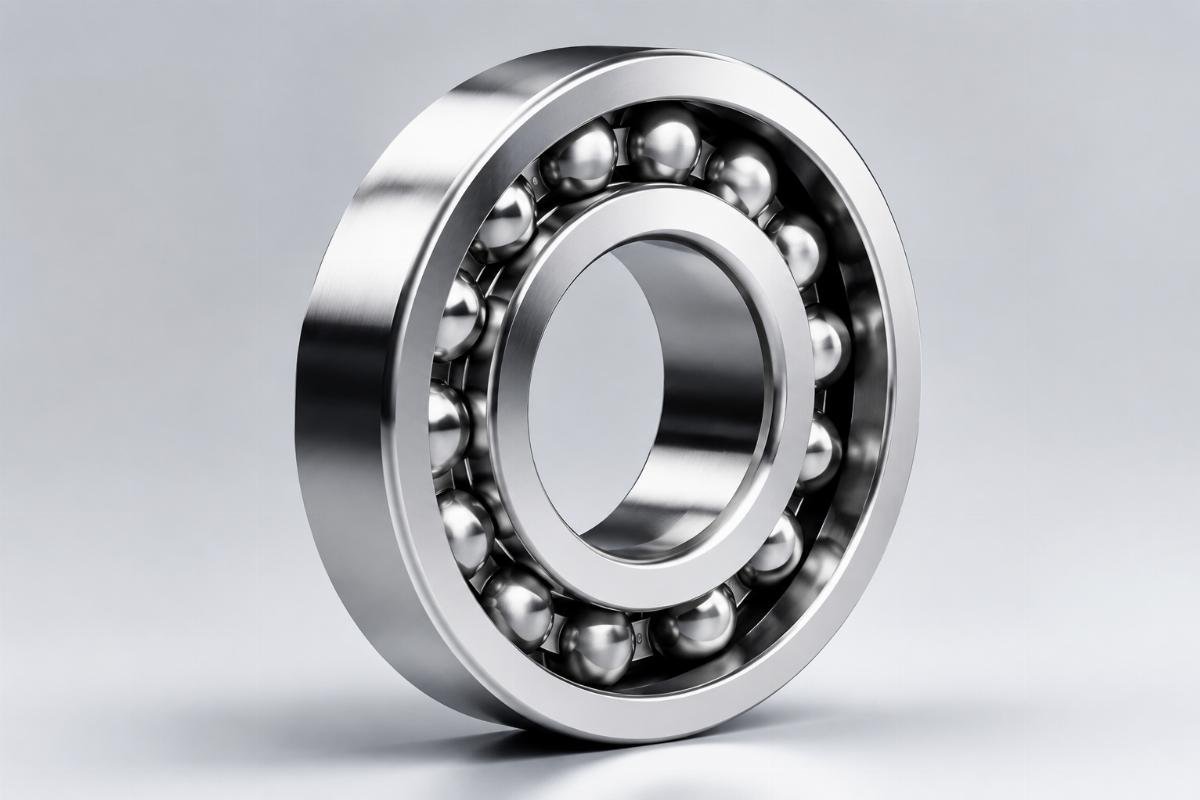
To calculate true TCO, buyers should include warehousing costs and capital tied up in extended lead time inventory, quantify hourly production losses from downtime, request MTBF data and failure analysis reports from suppliers, and factor in technical assistance and installation guidance costs. The average TCO advantage for qualified Chinese bearings across multiple industrial sectors falls in the range of roughly a third — a figure that surprises buyers who have only ever compared unit prices.
How Can Buyers Identify Qualified Chinese Bearing Suppliers Beyond Price?
Price should be the final consideration, not the starting point, when evaluating Chinese bearing suppliers. The market contains a wide spectrum of quality, and the differentiators between tier-one producers and commodity suppliers lie in quality control documentation, engineering support depth, and traceability infrastructure.
| Supplier Qualification Factor | Key Advantage | Ideal Application Scenario |
|---|---|---|
| Full Traceability Systems | Enables root cause analysis for failures | Critical production equipment with high downtime costs |
| Application-Specific Engineering | Optimizes bearing selection for unique operating conditions | Custom OEM equipment with non-standard requirements |
| Comprehensive Testing Capabilities | Validates performance claims before full-scale deployment | High-speed or high-load applications with safety implications |
| Responsive Technical Support | Minimizes unplanned downtime through rapid issue resolution | MRO operations across multiple facility locations |
A mining company operating in Africa required large spherical roller bearings (239/630CA, 630x850x165mm) for primary crushers, with demanding specifications: DNV certification, extended salt spray resistance, and phased delivery in multiple shipments. After rejecting several suppliers based on inadequate documentation, they selected a Chinese manufacturer with ISO 16281 testing capabilities and regional warehousing. The supplier provided full material traceability, dimensional inspection reports, and on-site installation support — ultimately delivering ahead of schedule while reducing costs substantially compared to the previous European supplier.
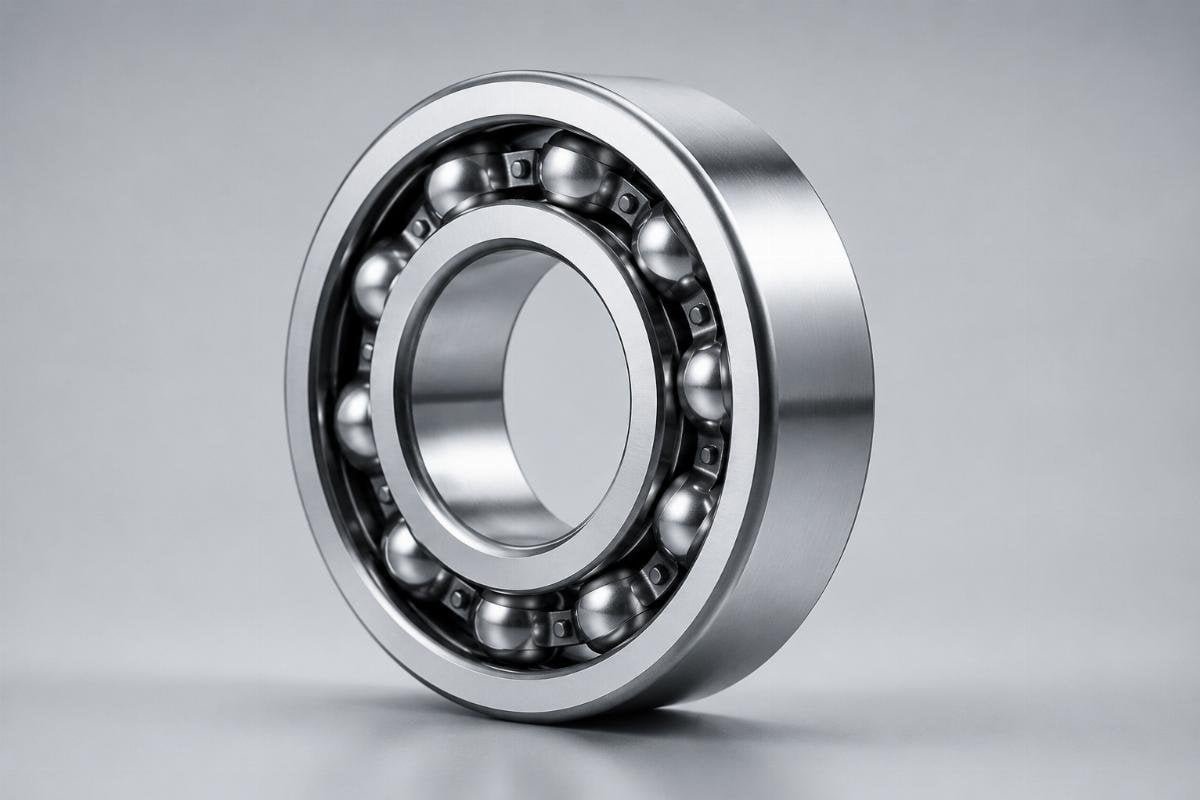
As an authorized SKF distributor, I see this distinction daily. When a buyer requests a rare designation — large bore, special precision class, ceramic hybrid, or non-standard clearance — the difference between a qualified supplier and a commodity trader becomes immediately visible. A qualified supplier pulls the batch trace sheet, confirms the forging origin, and ships from verified stock within days rather than quoting a factory lead time measured in months. Every shipment carries a certificate of origin and batch traceability documentation. Third-party inspection is available on request. This is not a marketing claim — it is the operational baseline that separates suppliers who can serve critical applications from those who cannot.
Buyers should require EN 10204 3.1 certification for raw materials with batch traceability, request ISO 492 dimensional reports and ISO 15242 vibration analysis, verify anti-counterfeiting measures such as laser marking or holographic labels, confirm the supplier provides written root cause analysis within a defined timeframe, and assess the availability of bearing selection software and load calculation services.
When Should Buyers Choose Imported vs Chinese Bearings for Specific Applications?
Chinese bearings are suitable for the majority of industrial applications, with imported brands remaining justified primarily for extreme precision requirements or proprietary designs where the OEM specification leaves no substitution room. The decision framework is not about nationality — it is about matching bearing capability to application criticality.
Chinese bearings from certified suppliers perform reliably across steel mills, mining operations, wind power installations, paper mills, machine tools, cement plants, petrochemical facilities, marine applications, and food processing lines. The full range of bearing types — deep groove ball, tapered roller, spherical roller, cylindrical roller, thrust, and self-aligning — is available from qualified Chinese manufacturers with clearance options spanning C2, CN, C3, and C4, and precision classes from P0 through P4.
Imported bearings retain their advantage in applications where the OEM has specified a proprietary internal geometry, where the operating environment demands fatigue life beyond what standard testing protocols can validate, or where the end-user’s insurance or regulatory framework mandates a specific brand origin. These scenarios represent a minority of industrial bearing applications, but they are the ones that shape the perception that imported always equals better.
The practical approach is to run parallel qualification testing for non-critical and moderately critical applications, reserve imported specifications for genuinely irreplaceable use cases, and build supplier relationships with Chinese manufacturers who can demonstrate the same documentation rigor — batch traceability, material certification, dimensional inspection, and failure analysis protocols — that buyers expect from established imported brands.
Conclusion
The imported versus Chinese bearing decision should be driven by verifiable certifications, traceable batch documentation, and measured TCO — not by legacy assumptions about geographic origin. Qualified Chinese bearing suppliers now match imported brands on durability for the majority of industrial applications, and the cost advantage becomes substantial once inventory carrying costs, downtime risk, and lead time flexibility are factored into the equation. Buyers who verify traceability systems, demand application-specific testing, and partner with authorized distributors who maintain full batch records will consistently outperform those who source on brand name alone.

Leave a Reply